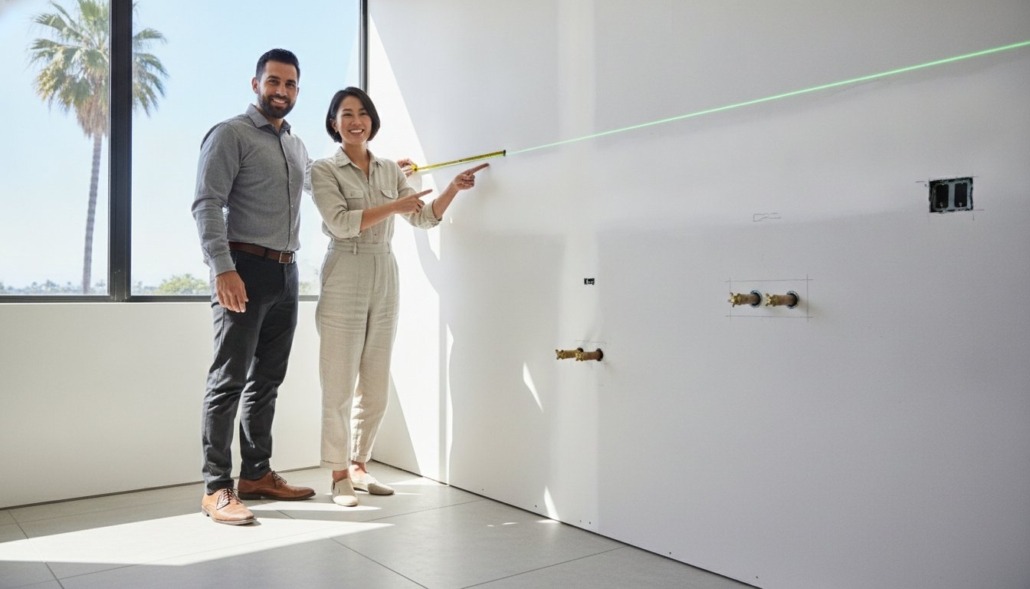
Preparing for Bathroom Vanity Installation: The Ultimate 2026 Los Angeles Guide
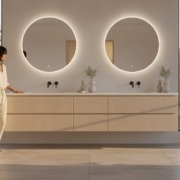
Could a simple three-inch oversight really be the difference between a spa-like sanctuary and a costly construction delay? For many Los Angeles homeowners, the excitement of selecting a stunning new 60 Inch Double Sink Vanity is often clouded by the quiet fear of it not actually fitting through the door or aligning with existing pipes. If you’ve been staring at your tape measure with a bit of trepidation, you aren’t alone. Learning how to measure for a bathroom vanity is the most critical step in your renovation journey; it’s especially vital when you’re working with the precise dimensions of a modern LA home where every square foot counts toward your property’s value.
We understand that you want your investment to look like it was hand-picked by a professional designer, and the secret to that polished finish lies entirely in the preparation. This guide is your ultimate 2026 blueprint for mastering the installation process, helping you navigate the updated Title 24 energy standards and the complexities of plumbing for trendy wall mount vanities. We’ll walk you through the essential steps to protect your gorgeous quartz tops and ensure your space meets the latest Los Angeles building codes. By the time you’re finished reading, you’ll have the confidence to transform your bathroom into a high-end retreat that impresses every guest who walks through the door.
Key Takeaways
- Learn exactly how to measure for a bathroom vanity with our precision blueprint to ensure your new luxury fixture fits perfectly within your Los Angeles home’s unique dimensions.
- Discover how to align your plumbing and electrical systems for modern upgrades like wall mount vanities and smart toilet integration.
- Master the art of “surgical demolition” to protect your drywall and identify hidden moisture issues before your new installation begins.
- Coordinate your vanity finish with shower systems and freestanding bathtubs to achieve a cohesive, designer-inspired Los Angeles vibe.
- Establish a fail-safe inspection protocol for delivery day to ensure your premium materials arrive in pristine condition for a smooth project handoff.
The 5 Critical Measurements for a Perfect Vanity Fit
Have you ever fallen in love with a piece of furniture only to find it’s two inches too wide for your wall? In the vibrant world of Los Angeles real estate, where every inch of a master suite or powder room is meticulously planned, “roughly measuring” is the primary reason for installation day disasters. A Bathroom cabinet isn’t just a box; it’s a structural element that must coexist with plumbing, electrical, and architectural constraints. Understanding how to measure for a bathroom vanity requires more than just a quick flick of a tape measure; it demands a strategic look at how the piece interacts with your entire room.
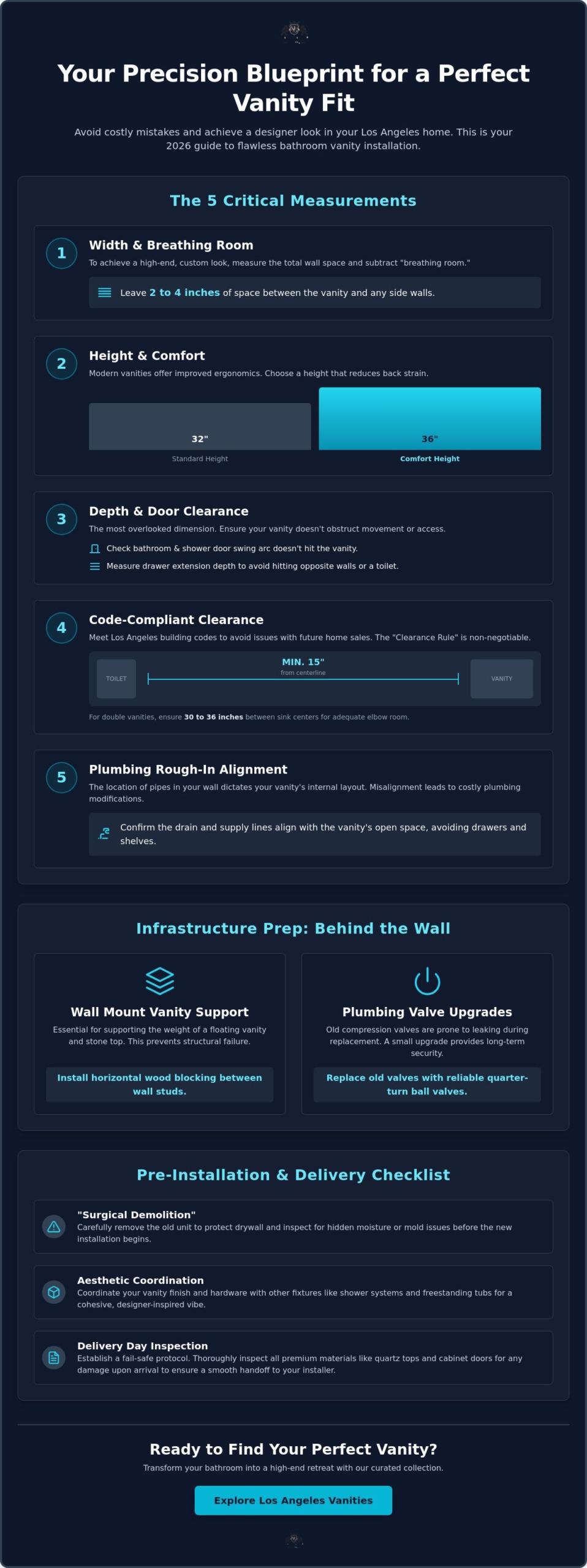
If you’re selecting from various bathroom vanity sizes, you must account for the “Clearance Rule.” According to the 2026 California Building Standards Code, you need a minimum of 15 inches from the centerline of your toilet to any side obstruction. If your new vanity is too wide, you won’t just have a tight squeeze; you’ll have a code violation that could complicate a future home sale. You also need to identify the “rough-in” height of your plumbing. This is the exact spot where your drain and supply lines exit the wall. If these don’t align with the internal shelving or drawers of your new vanity, you’ll face expensive mid-project plumbing modifications that can easily drain your budget. Learning how to measure for a bathroom vanity is the foundation of a stress-free remodel.
Width, Height, and the Social Space Factor
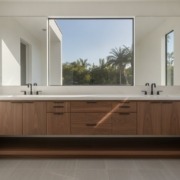
Choosing the right height is about more than just aesthetics. While “standard” height used to be the norm, many Los Angeles homeowners now prefer “comfort height” vanities that sit around 36 inches high to reduce back strain. When measuring width, try to leave at least two to four inches of “breathing room” between the vanity and any side walls. This small gap creates a high-end, custom look rather than a cramped appearance. If you’re opting for a double vanity, ensure there are at least 30 to 36 inches between the centers of the two sinks. This ensures you and your partner have enough elbow room to get ready simultaneously without a morning collision.
The Depth and Clearance Checklist
Depth is often the most overlooked dimension. You must map the swing arc of your bathroom door and any shower doors to ensure they don’t strike the vanity. Don’t forget to check the drawer extension depth; if your drawers hit the opposite wall or the toilet when opened, the vanity is functionally useless. Finally, measure the area for your backsplash. If you have existing mirrors or low-hanging electrical outlets, a tall backsplash might interfere with them. Taking these five measurements seriously ensures your installation day is a celebration of design rather than a lesson in logistics.
Infrastructure Prep: Plumbing and Electrical Alignment
Will your new vanity hide the pipes or turn them into an accidental focal point? While learning how to measure for a bathroom vanity often focuses on the exterior dimensions, the real magic happens behind the cabinet doors. Preparing your infrastructure is about ensuring the “guts” of your bathroom align perfectly with your high-end aesthetic. If you’re transitioning from a traditional floor-mounted unit to a modern wall mount vanity, your wall requires structural reinforcement. You must install horizontal wood blocking between the studs before the vanity arrives to support the significant weight of the cabinet and stone top. Without this, you risk structural failure that no amount of designer hardware can fix.
2026 is also the ideal time to evaluate your shut-off valves. Many Los Angeles homes still rely on old, crusty compression valves that are prone to leaking during a swap. Replacing these with high-quality quarter-turn ball valves provides long-term security and a professional finish. As you plan your space, seeking expert tips on bathroom layout can help you visualize how these internal components dictate your final design.
Plumbing Rough-In Positioning
Precision is your best friend when aligning the drain pipe. If you’ve selected a 48 inch bathroom vanity with internal drawers, the plumbing must be centered perfectly to avoid hitting the drawer boxes. Many luxury vanities feature “U-shaped” drawers designed to wrap around the P-trap, but this only works if your rough-in height is correct. Standard drain heights usually sit between 12 and 18 inches from the finished floor. If you’re upgrading to a double sink configuration, you’ll need to split the supply lines and ensure the drain system can handle the increased volume without cluttering the cabinet interior.
Powering Your Modern Fixtures
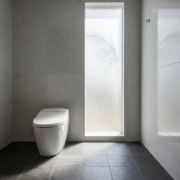
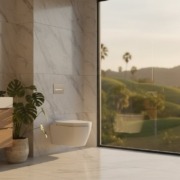
Modern Los Angeles bathrooms are becoming high-tech hubs for wellness. This means your electrical prep must be as rigorous as your plumbing. If your design includes a smart toilet, you’ll need a dedicated GFCI-protected circuit positioned within reach of the unit. Similarly, luxury LED mirrors often require hardwiring behind the wall for a seamless, cord-free look. When you understand how to measure for a bathroom vanity, you must also map out these power points to ensure they don’t interfere with the vanity’s backsplash or side panels. Ensuring your electrical outlets are strategically placed for built-in power strips will keep your countertops clear of clutter. If you’re ready to find the perfect centerpiece for your layout, exploring a carefully curated collection of fixtures is the next logical step in your creative journey.
Site Demolition and Wall Preparation
The demolition phase is where your creative vision finally begins to take physical shape. However, this isn’t the time for a sledgehammer; it’s a time for a surgical approach that respects the integrity of your home. Taking out an old unit requires patience to avoid damaging the surrounding drywall or flooring. If you’ve already mastered how to measure for a bathroom vanity, you know exactly where your new footprint will lie. This knowledge is vital because it reveals whether your new, sleeker vanity will cover the “scar” left by the old one. If your new choice is smaller than the previous cabinet, you’ll need to address the unfinished flooring or wall space that was previously hidden for years.
Once the old cabinet is out, take a moment to inspect the unseen wall. This is a critical window of opportunity to check for mold or water damage that often hides behind plumbing fixtures in Los Angeles homes. Catching a small leak now prevents a catastrophic failure after your luxury materials are installed. Check the levelness of your wall too. A flat wall is the secret to a professional-looking backsplash. If the wall is bowed, your stone top won’t sit flush, creating unsightly gaps that even the best caulk can’t hide. We want to ensure your installation day is a celebration of design rather than a repair project.
The Clean Break: Removing the Old Unit
Start by scoring the caulk line with a sharp utility knife where the vanity meets the wall. This simple step prevents the drywall paper from peeling and creating a messy repair job. After turning off the water, safely disconnect and cap the supply lines to prevent any accidental flooding in your home. Don’t underestimate the weight of old stone countertops. These are often surprisingly heavy and can crack or cause injury if handled alone. Having a partner help you lift ensures your safety and protects your bathroom floor from accidental chips or scratches during the removal process.
Surface Prep for a Flawless Finish
With the space cleared, focus on patching and sanding the drywall to create a smooth mounting surface. This is also the best time to paint the wall. It’s much easier to roll on a fresh coat now than to try and cut in around a new, expensive cabinet later. Finally, check your floor for levelness. If the floor slopes, you’ll need to use shims to level the vanity. When you understand how to measure for a bathroom vanity, you can plan exactly where these shims need to go so they remain completely invisible, maintaining that clean, designer aesthetic you’re after for your Los Angeles retreat.
Aesthetic Coordination: Matching the Los Angeles Vibe
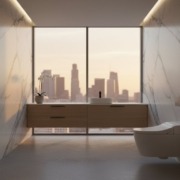
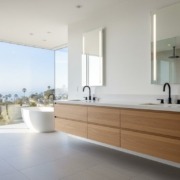
Why settle for a merely functional room when you can create a breathtaking sanctuary that serves as a conversation piece? In Los Angeles, a bathroom remodel isn’t just about utility; it’s about aesthetic validation and the social reward of a perfectly executed design. While you’ve already mastered the technical side of how to measure for a bathroom vanity, the coordination of finishes is where your creative agency truly takes center stage. To achieve that high-end “designer” look, your vanity must exist in perfect harmony with other major fixtures. For instance, ensuring your vanity’s wood tone or paint finish complements your freestanding bathtub creates a cohesive visual flow that feels intentional rather than assembled.
Hardware coordination is the “jewelry” of your bathroom. You’ll want to match your faucet finishes with your cabinet pulls and shower systems to maintain a consistent language throughout the space. Don’t forget to consider how your vanity placement interacts with the famous Los Angeles sunlight. A vanity positioned to catch natural morning light can transform your daily routine into a spa-like experience. When you design a “guest-ready” powder room with these details in mind, you aren’t just installing a cabinet; you’re creating a social space that sparks genuine admiration from every visitor who enters your home.
Material and Finish Selection
As we move through 2026, matte finishes are seeing a significant surge in popularity across Santa Monica and Venice beach house remodels. These velvety surfaces offer a sophisticated, organic feel that resists fingerprints and water spots better than high-gloss alternatives. When selecting your vanity, think about how the quartz top will coordinate with your floor tile textures. A subtle contrast often works best; if your floors have a heavy grain or pattern, a cleaner, more solid-colored countertop provides a necessary visual rest. Even the direction of the wood grain on your cabinet matters. Vertical grains can make a ceiling feel higher, while horizontal grains can make a tight Los Angeles bathroom feel more expansive.
Accessorizing for the Final Look
The final layer of your design involves the perfect marriage of sink, faucet, and mirror. Always choose a faucet height that accounts for your sink depth to prevent splashing and ensure comfort. For your mirror, we recommend the “2-inch rule”: your mirror should be at least two inches narrower than the vanity on each side to create a balanced, framed look. This symmetry is especially important when integrating modern LED mirrors and high-tech toilets. By aligning these contemporary elements, you ensure the room feels like a unified wellness retreat. Ready to bring this vision to life? Explore our premium selection of luxury vanities and find the perfect centerpiece for your Los Angeles home.
Final Logistics: Delivery and Professional Handoff
Is there anything more exhilarating than the moment your new luxury vanity finally arrives at your doorstep? After weeks of planning and mastering how to measure for a bathroom vanity, you’ve reached the final stretch of your Los Angeles home transformation. However, the transition from delivery truck to bathroom floor is where many projects stumble. Success in these final hours depends on a rigorous inspection protocol and clear communication with your installation team—a level of precision that boutique contractors like Interior Design & Building Inc specialize in to ensure every luxury detail is preserved. We want to ensure that your investment is protected and that the social payoff we’ve discussed becomes a reality without any last-minute stress.
Receiving Your Luxury Vanity
The moment your unit arrives, perform a “surgical” inspection before the delivery driver leaves. Checking for hairline cracks in stone or quartz tops is a critical first step; these can sometimes be invisible at a distance but will expand under the pressure of installation. Open every box to verify that all hardware, drawer pulls, and mounting brackets are present. Navigating the narrow hallways of a classic Burbank bungalow or a West Hollywood apartment with a 72-inch double vanity is a logistical challenge. Measure your doorways and tight corners one last time to ensure the delivery team can move the unit safely without scuffing your freshly painted walls.
The Professional Handoff
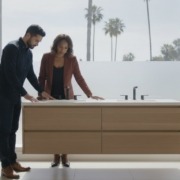
If you’ve hired a pro, your role shifts to that of a project manager. Provide your contractor with a “spec sheet” for the new unit, which includes the manufacturer’s requirements for wall reinforcement and plumbing rough-in locations. This is especially vital for wall mount vanities, as the installer needs to know exactly where the internal blocking was placed during your infrastructure prep. Clear communication ensures they don’t accidentally drill into a supply line while securing the cabinet. For more tailored advice on choosing the right materials for your specific neighborhood vibe, visit our Los Angeles bathroom supply store for a personal consultation. We are here to be your partner in creating a space that feels both authoritative and neighborly.
Ready to Transform Your Los Angeles Sanctuary?
Your journey toward a stunning bathroom remodel is finally within reach. By mastering how to measure for a bathroom vanity and aligning your plumbing with modern 2026 standards, you’ve already bypassed the most common pitfalls of home renovation. You now understand that a successful installation is built on a foundation of surgical demolition, precise infrastructure prep, and a keen eye for the unique Southern California aesthetic. Whether you’re coordinating a sleek wall mount unit with a freestanding bathtub or preparing a dedicated circuit for a high-tech smart toilet, your attention to detail ensures a result that will impress every guest who enters your home.
At Milan Gallery, we’ve spent over 15 years providing Los Angeles homeowners with the expertise and high-end fixtures needed to bring these visions to life. We invite you to visit our local showroom, the largest in the area, to experience our exclusive designs tailored specifically for modern California living. You can touch the materials, inspect the craftsmanship, and receive a personal consultation from a team that truly cares about your project’s success. Explore our exclusive 2026 Vanity Collection at Milan Gallery and take the final step toward the home you deserve. We can’t wait to see the beautiful space you’ll create!
Frequently Asked Questions
How far should a vanity be from the toilet in a standard LA bathroom?
You must maintain a minimum of 15 inches from the centerline of your toilet to the side of your vanity to meet Los Angeles building codes. This ensures adequate space for movement and prevents the room from feeling cramped. If you’re working with a tight layout, always double check these clearances early in the design phase to avoid failing a final inspection or having to move heavy fixtures later.
Do I need to reinforce my wall for a floating vanity installation?
Yes, reinforcing your wall with horizontal wood blocking between the studs is mandatory for any wall mount vanity installation. These luxury units are significantly heavier than they look once you add the stone countertop and sinks. Without proper structural support, the vanity could pull away from the drywall; this causes catastrophic damage to your plumbing and your beautiful new flooring.
What is the standard height for a bathroom vanity in 2026?
The preferred height for most modern Los Angeles homes in 2026 is 36 inches, often referred to as “comfort height.” While older standards sat around 32 inches, the taller profile reduces back strain and aligns better with contemporary luxury aesthetics. If you’re designing a space specifically for children, you might still consider a slightly lower cabinet, but the 36-inch standard is the top choice for master suites.
Can I install a new vanity over existing flooring?
You can certainly install a new vanity over existing flooring if the new unit’s footprint is the same size or larger than the old one. If you’re switching to a smaller model or a floating style, you’ll likely reveal “scars” or unfinished patches in the tile. This is a vital part of learning how to measure for a bathroom vanity; you must account for what’s underneath before making your final selection.
How do I move the plumbing if my new vanity has a different sink placement?
Moving plumbing for a new sink placement requires cutting into the drywall to reroute the drain and supply lines. It’s important to remember that in Los Angeles, any alteration to your plumbing system typically requires a building permit from the LADBS. This process ensures your home remains safe and compliant, preventing costly issues if you ever decide to put your property on the market.
What electrical prep is needed for an LED mirror?
Most luxury LED mirrors require a recessed electrical box positioned directly behind the mirror’s mounting area for a clean, cord-free look. You must ensure this connection is GFCI-protected to meet 2026 safety standards. Having your electrician install the power source before the vanity and mirror arrive will save you from having to tear into your freshly finished walls later in the project.
How much clearance do I need for vanity drawers to open fully?
You generally need at least 24 to 30 inches of clear space in front of your vanity for drawers to extend fully without hitting a wall or toilet. When you’re figuring out how to measure for a bathroom vanity, don’t just look at the cabinet’s closed depth. Open the drawers and measure the total distance from the wall to the drawer handle to ensure your bathroom remains functional and easy to navigate.
Should I paint my bathroom before or after installing the vanity?
You should always aim to paint your bathroom before the new vanity is installed. It’s much simpler to roll paint over a flat, empty wall than to meticulously cut in around a brand new stone backsplash and luxury cabinetry. Painting first also protects your new investment from accidental splatters or drips, ensuring your high-end retreat looks pristine from the very first day.