
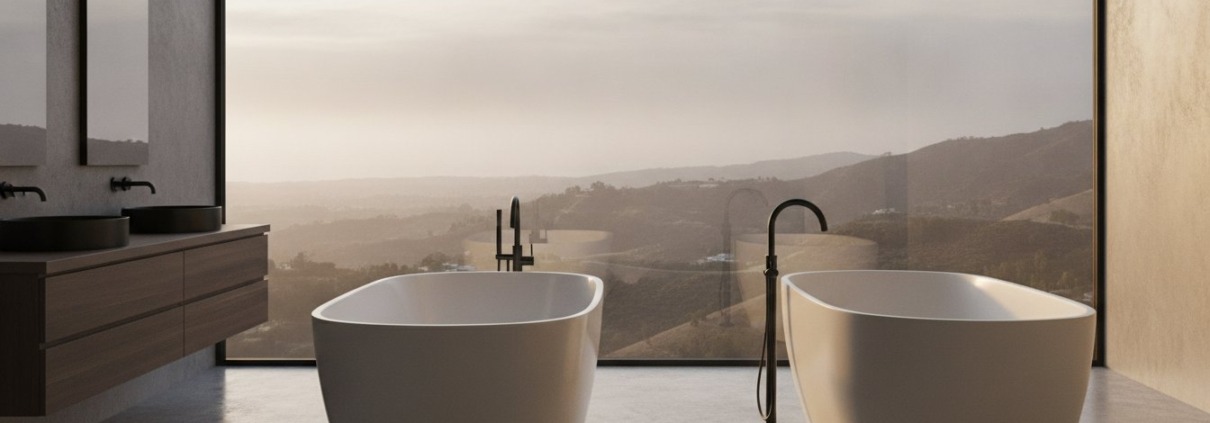
Acrylic vs. Stone Resin Freestanding Tubs: The Ultimate 2026 Comparison Guide
Would you trade your dream of a deep, relaxing soak for the peace of mind that your bathroom floor won’t collapse under the weight? It’s a question many Los Angeles homeowners ask when weighing the pros and cons of acrylic vs stone resin freestanding tubs for their upcoming remodel. You want a stunning, spa-like centerpiece for your master suite, but the fear of a 300 pound stone tub being too heavy or an acrylic model looking cheap can make the decision feel paralyzing. We understand that this is a significant investment in both your home’s resale value and your daily comfort.
This guide will clear the confusion by breaking down exactly how these materials perform under the strict 2026 County of Los Angeles Building Codes. We’re going to explore the critical differences in heat retention, long-term durability, and the specific structural requirements your floor needs to meet before you commit to a purchase. By the time you’re finished reading, you’ll know exactly which material belongs in your private sanctuary. You’ll be ready to visit our Sun Valley showroom to touch these finishes for yourself and see why the right choice makes all the difference for your home and your social circle.
Key Takeaways
- Learn the fundamental differences between high-grade acrylic and composite stone resin to ensure your bathroom investment matches your long-term design vision.
- Compare the thermal mass of acrylic vs stone resin freestanding tubs to discover which material provides the superior heat retention needed for truly restorative soaks.
- Understand the maintenance benefits of solid surface materials, including how stone resin can be easily restored to its pristine state if scratches occur over time.
- Evaluate the structural requirements for your Los Angeles home by calculating the total weight impact of a full tub on your existing floor joists.
- Match your specific lifestyle needs and budget to the right material, whether you prioritize the lightweight versatility of acrylic or the generational luxury of stone.
Understanding the Basics: What Are Acrylic and Stone Resin Tubs?
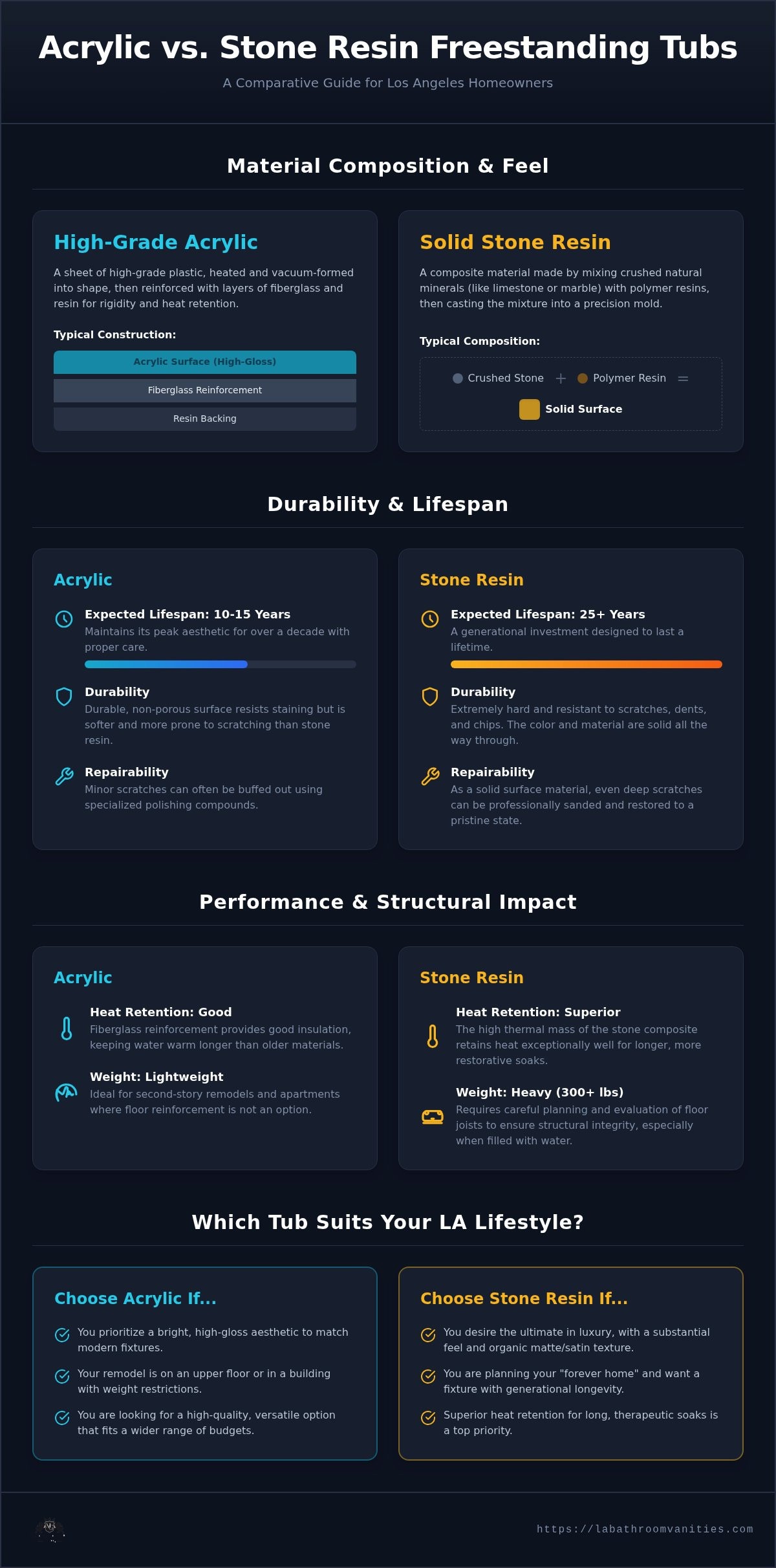
Have you ever wondered why two bathtubs that look remarkably similar on a screen can have such vastly different price tags and weights? When you’re deciding between acrylic vs stone resin freestanding tubs, the secret is found in the material science and the intricate manufacturing methods used to create these bathroom centerpieces. Acrylic is essentially a high-grade plastic sheet that’s heated and vacuum-formed into a specific shape, then reinforced with layers of fiberglass for structural integrity. In contrast, stone resin, often referred to as “solid surface,” is crafted by mixing crushed natural stone with specialized polymer resins and casting that heavy mixture into a precision mold. This fundamental difference in modern bathtub materials dictates everything from how the surface feels against your skin to how the fixture will perform in your Los Angeles home over the next decade.
First impressions usually come down to the finish and the “hand feel” of the material. Acrylic offers a classic, high-gloss shine that reflects your bathroom lighting beautifully, creating a bright and airy aesthetic. Stone resin provides a more organic, sophisticated matte or satin texture that mimics the look of carved stone. While both options can transform a room, they speak to different design sensibilities and practical needs.
The Anatomy of a Modern Acrylic Tub
Modern acrylic tubs aren’t the flimsy fixtures of the past. They utilize a sophisticated multi-layer construction where the primary acrylic surface is backed by a thick reinforcement of fiberglass and resin to trap heat and provide a rigid, sturdy feel. This lightweight nature is a massive advantage for homeowners who are trying to coordinate their new tub with specific bathroom vanity sizes in smaller Los Angeles apartments or second-story remodels where floor reinforcement isn’t a viable option. When you’re shopping, keep an eye out for “cross-linked acrylic,” which is considered the gold standard for durability because it creates a stable molecular bond that resists yellowing and surface cracking for years.
The Composition of Premium Stone Resin
If you’re looking for a material that feels substantial and permanent, stone resin is the undisputed champion. The stone-to-resin ratio is carefully balanced to give the fixture the cool, heavy weight of real stone while the polymer resin provides the flexibility needed to prevent structural cracking. Because stone resin is a non-porous, solid-through material, it doesn’t rely on a separate top coating that can peel or wear away. This makes it exceptionally hygienic and resistant to mold or mildew. It’s easy to see why stone resin has become the cornerstone of luxury freestanding bathtubs in high-end LA penthouses where the sensory experience of a soak is just as important as the architectural statement the tub makes.
Durability and Maintenance: Which Material Wins?
How long will your bathroom masterpiece remain in pristine condition? When evaluating acrylic vs stone resin freestanding tubs, durability is often the deciding factor for our Los Angeles clients. While both materials are engineered to withstand daily use, they handle the inevitable wear and tear of a busy household quite differently. Acrylic offers a durable, non-porous surface that resists staining, but it’s generally softer than its stone counterpart. Stone resin provides a rock-hard exterior that’s incredibly difficult to scratch or dent.
If you’re wondering what is a stone resin bathtub, it’s a solid composite that offers a generational lifespan of 25 years or more. In comparison, a high-quality acrylic tub typically maintains its peak aesthetic for 10 to 15 years before the surface begins to show its age. This longevity gap is a significant consideration if you’re planning your “forever home” in the Hollywood Hills or Santa Monica.
Repairability and Surface Integrity
Accidents happen. If you scratch your acrylic tub, you can often restore the shine using a specialized buffing compound and a little elbow grease. However, stone resin takes repairability to a professional level. Because it’s a solid-surface material, deep scratches or even small chips can be sanded down and polished away until the damage completely disappears. The color is consistent through the entire thickness of the material. You’ll never see a different shade underneath. This is vital in sun-drenched LA homes. Lower-quality acrylic can yellow over time when exposed to the intense UV light from large windows, but premium stone resin remains brilliantly white for decades.
Cleaning and Hygiene Standards
Both materials are non-porous. This means they don’t harbor bacteria, mold, or mildew. It’s a huge win for hygiene. Stone resin has a slight edge in the “feel” of cleanliness. Its ultra-smooth, dense surface naturally resists the buildup of soap scum and hard water deposits. To keep your freestanding bathtub looking like it just left our showroom, you should stick to mild, non-abrasive cleaners. Avoid harsh chemicals like:
- Bleach or ammonia
- Abrasive scouring pads
- Acidic scale removers
These can dull the finish of acrylic and eventually degrade the resin in stone composites. If you want to see these finishes in person, browse our latest collection to find the perfect match for your aesthetic.
Performance: Heat Retention and the Sensory Experience
Have you ever settled into a deep bath only to find the water turning lukewarm before you’ve even finished your first chapter? This is where the debate over acrylic vs stone resin freestanding tubs becomes a matter of pure physical comfort. Performance isn’t just about how the tub holds up; it’s about how it holds heat and how it sounds when the water hits the surface. Stone resin possesses a significant thermal mass. While it might feel cool to the initial touch, it acts like a thermal battery once the water is in. Acrylic, being a natural insulator, doesn’t steal heat from your body as quickly, making it feel warm the moment you step in.
The sensory experience extends to acoustics and stability. If you’ve ever felt a slight “give” or flex when stepping into a tub, you were likely in an acrylic model. While modern reinforcement makes them incredibly strong, they lack the absolute, immovable solidity of stone resin. Additionally, the density of stone resin provides superior sound dampening. The hollow “drum” sound of water hitting acrylic is replaced by a soft, muted splash in a stone resin tub, creating a much more peaceful environment for your evening wind-down.
The Science of the Long Soak
If your idea of a perfect Sunday involves an hour-long soak, stone resin is your best ally. Its thick walls serve as a powerful barrier against heat loss. In technical terms, thermal conductivity is the rate at which heat passes through a material, and stone resin has a much lower rate of loss than unreinforced plastics. This means your water stays at a consistent temperature for much longer. Acrylic is fantastic for quick, efficient daily baths, but for those who treat bathing as a ritual, the thermal mass of stone is hard to beat.
Tactile and Visual Appeal
The visual performance of your tub is what creates that immediate “wow factor” for guests and potential buyers. Matte stone resin offers an architectural, sculptural look that defines a high-end LA master suite. Conversely, high-gloss acrylic is a brilliant choice for smaller or darker bathrooms because it reflects light, making the space feel larger and cleaner. To create a truly cohesive design, we recommend coordinating your tub’s finish with our range of modern bathroom vanities. This ensures that your textures and tones work together to build a unified, luxurious retreat rather than a collection of mismatched fixtures.
Weight and Structural Requirements for Los Angeles Remodels
Before you fall in love with a specific silhouette, you have to ask a very practical question: can your floor actually hold it? The weight disparity in the acrylic vs stone resin freestanding tubs debate is massive. A standard 60 inch acrylic tub usually weighs between 60 and 100 pounds empty, making it easy for two people to carry. A stone resin tub of the same size typically starts at 300 pounds and can easily reach 500 pounds before you even turn on the faucet. This difference changes everything from your delivery logistics to your total remodeling budget.
You can’t just look at the empty weight. You have to calculate the “Full Weight” to understand the true impact on your home’s structure. Water weighs approximately 8.3 pounds per gallon. If you choose a 50 gallon stone resin tub, that’s 415 pounds of water plus the 500 pound tub and a 180 pound bather. Suddenly, your floor is supporting over 1,000 pounds in a very small footprint. This is why understanding your home’s limits is non-negotiable for a safe installation.
Structural Floor Loading 101
If you live in one of Los Angeles’ iconic older homes, such as a 1920s Spanish Colonial or a mid-century bungalow, your second-story floor joists may not have been designed for such concentrated loads. We often recommend that our clients consult a structural engineer before installing a stone resin model to see if the subfloor needs reinforcing to meet the 2026 County of Los Angeles Building Code. In these scenarios, acrylic is the undisputed hero for “low-impact” remodels where you want the luxury look without a massive construction bill. To clarify the engineering terms, a dead load refers to the weight of the permanent fixture itself, while a live load accounts for the added weight of the water and the person using it.
Plumbing and Installation Nuances
Logistics are another hurdle to clear. Getting a 500 pound solid stone fixture into a Santa Monica high-rise or up a narrow staircase in the Hollywood Hills requires serious planning and multi-person labor. Beyond the heavy lifting, you must ensure your plumbing “rough-in” location is exact. There’s very little room for error when moving a stone tub once it’s set. You also need to measure for proper clearance so the tub doesn’t crowd your 48 inch bathroom vanity or block the path to the shower. If you’re feeling overwhelmed by these technical logistics, explore our full collection of freestanding tubs and let us help you find the perfect match for your home’s structural capacity.
Making the Final Choice: Which Tub Suits Your LA Lifestyle?
Choosing between acrylic vs stone resin freestanding tubs ultimately comes down to your specific goals for the space and the structural reality of your property. If you’re a homeowner in a historic neighborhood like Hancock Park or a busy professional in a sleek Downtown loft, your perfect tub will look different based on how you use the room. Acrylic’s the ideal candidate for those who prioritize versatility and ease of installation. It’s a fantastic solution for second-story remodels where weight’s a primary concern, or for projects that demand a high-end, polished look without the need for floor reinforcement.
On the other hand, stone resin’s for the homeowner who views their bathroom as a long-term sanctuary. If you value the sensory experience of a deep, warm soak and want a fixture that feels like a permanent piece of architecture, stone resin’s the clear winner. In the high-stakes Los Angeles real estate market, these premium materials act as significant value-adders. Discerning buyers often look for the solid-surface finish as a marker of quality; it signals that the home was built with high-end, durable materials meant to last for decades.
Design Integration and Style
To create a truly professional look, you should consider how your tub material interacts with your other fixtures. We often suggest matching the matte finish of stone resin with quartz or marble vanity tops to create a cohesive, high-end feel. A freestanding tub’s the natural focal point of any large master suite; its placement should invite you into the room and set the tone for the entire space. At Milan Gallery Bathroom Vanities, we provide personalized consultations to help you bridge the gap between contemporary aesthetics and classic quality, ensuring your tub complements your overall design vision perfectly.
The Milan Gallery Bathroom Vanities Showroom Advantage
While reading about these materials is helpful, nothing compares to seeing and touching them in person. We invite you to visit our Sun Valley showroom to experience the difference in scale, texture, and weight for yourself. Our team has over 15 years of experience helping Angelenos navigate the unique delivery and installation challenges of our local market. Whether you’re navigating a tight staircase in the Hollywood Hills or a service elevator in a Santa Monica high-rise, we’ve the expertise to get your dream tub home safely. Visit our Sun Valley showroom or browse our curated freestanding tub collection today!
Ready to Transform Your Los Angeles Bathroom?
Your journey toward a spa-like master suite hinges on finding the perfect balance between aesthetic beauty and long-term performance. Whether you prioritize the lightweight versatility of high-grade acrylic or the generational, thermal-rich investment of stone resin, your choice’ll define your daily ritual for years to come. Your final decision on acrylic vs stone resin freestanding tubs should reflect both your personal style and the practical structural needs of your specific Los Angeles property.
With 15+ years of expert guidance in Los Angeles, Milan Gallery Bathroom Vanities is here to ensure your remodel’s a resounding success. We invite you to visit the largest bathroom showroom in the Sun Valley area to touch these materials in person and discover our exclusive designs for high-end LA remodels. Our team’s dedicated to helping you bridge the gap between contemporary aesthetics and classic quality, making sure your new fixture provides the aesthetic validation you’re looking for.
Explore Our Premium Freestanding Tub Collection and take the first step toward the restorative retreat you deserve. We can’t wait to help you bring your creative vision to life and transform your home into a sanctuary of luxury.
Frequently Asked Questions
Do stone resin bathtubs require floor reinforcement?
Yes, stone resin tubs often require floor reinforcement because they weigh 300 to 500 pounds empty. Once you add the weight of the water and a bather, the total load can exceed 1,000 pounds. Under the 2026 County of Los Angeles Building Code, your floor joists must be able to support this concentrated weight. We always recommend consulting a structural engineer to ensure your subfloor is ready for such a substantial fixture.
Will an acrylic freestanding tub scratch easily?
Acrylic is softer than stone resin, so it can scratch if you use abrasive cleaners or sharp objects. However, modern high-grade acrylic is remarkably resilient against daily wear and tear. If a small scratch does occur, it isn’t a permanent problem. Most surface marks can be buffed out using a specialized polishing kit, which restores the high-gloss finish to its original showroom quality in just a few minutes.
Which material keeps bathwater warm for the longest time?
Stone resin is the champion of heat retention due to its superior thermal mass. While it takes a few minutes to absorb the heat from the water initially, its thick walls act as a powerful insulator. In the debate of acrylic vs stone resin freestanding tubs, stone resin allows for a much longer soak without the need to constantly add hot water. This creates a more relaxing and efficient sensory experience for your evening wind-down.
Is stone resin harder to clean than acrylic?
No, stone resin is actually very easy to maintain because it is non-porous and solid throughout. It naturally resists the buildup of soap scum and hard water deposits that can sometimes plague other materials. To keep the surface looking pristine, you only need mild soap and a soft cloth. You should avoid harsh chemicals like bleach or ammonia, as these can eventually dull the sophisticated matte or satin finish over time.
Can I install a stone resin tub on a second floor in an older LA home?
It depends entirely on the structural integrity of your specific floor joists. Many older Los Angeles homes were built with lighter weight loads in mind. Since a full stone resin tub can weigh half a ton, you must verify that your home meets the 2026 County of Los Angeles Residential Code. If your floor can’t support the weight, a lightweight acrylic tub is often the safer and more cost-effective alternative for your remodel.
How do I repair a chip in a stone resin bathtub?
Repairing a chip in stone resin is straightforward because the material is the same color and texture through its entire thickness. You can use a color-matched repair kit to fill the void. Once the resin cures, you simply sand it down with fine-grit sandpaper and polish the area. This solid-surface advantage means the repair becomes virtually invisible, ensuring your investment remains pristine and beautiful for decades to come.
Are acrylic bathtubs better for small bathroom remodels?
Acrylic tubs are often the best choice for smaller spaces because they offer more design flexibility and a much lower weight profile. Their high-gloss finish reflects light, which helps a compact Los Angeles bathroom feel more open and airy. Additionally, the lighter weight makes it much easier to maneuver the tub into tight corners or through narrow doorways without requiring a large installation crew or expensive, time-consuming structural modifications to your home.
What is the price difference between acrylic and stone resin tubs?
When comparing acrylic vs stone resin freestanding tubs, the price difference reflects the materials used. Acrylic tubs are more budget-friendly, with material costs between $500 and $1,200. Stone resin is a premium investment, with the tub itself costing $1,500 to $4,500. In Los Angeles, the average installed cost for acrylic is about $6,000, while stone resin ranges from $9,000 to $10,000. This higher price accounts for the material’s superior longevity and finish.