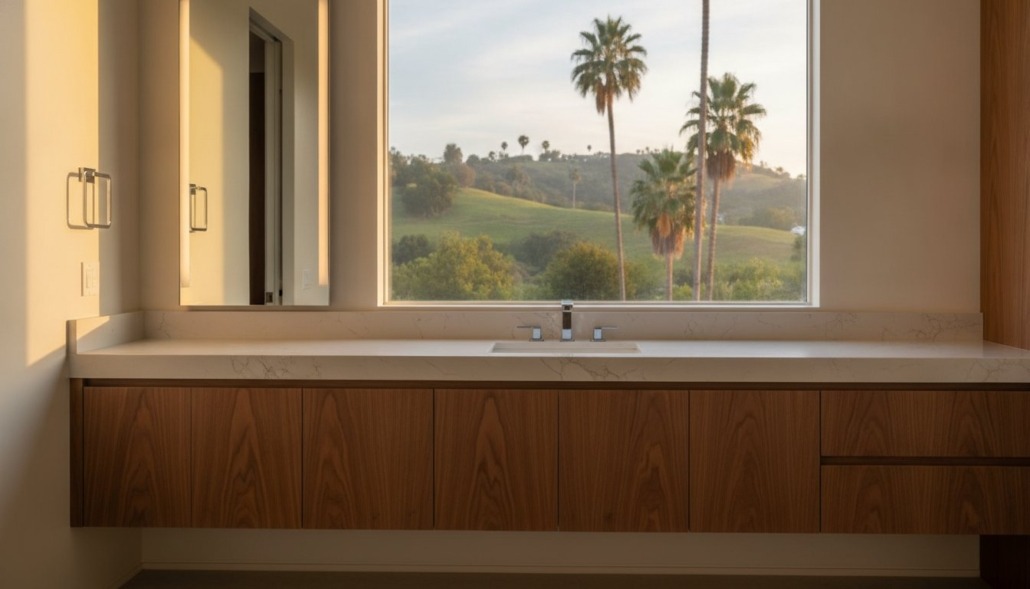
The Best Material for Bathroom Vanity Units: A 2026 Los Angeles Buying Guide
What if that stunning, high-priced cabinet you’ve been eyeing is actually destined to warp and peel before your next Los Angeles summer even begins? It’s completely understandable to feel overwhelmed by the massive price gap between MDF and solid wood, or to worry about finding the best material for bathroom vanity cabinets that can actually handle our local humidity. You want a space that doesn’t just look incredible for a few months but remains a source of pride for a decade or more. We believe your home deserves the aesthetic validation of a high-end spa, but we also know you need the practical security of a reliable investment.
By reading this guide, you’ll master the technical and aesthetic nuances of premium materials, ensuring your 2026 remodel stands the test of time while meeting California’s strict Title 24 and CALGreen standards. We’re going to break down the durability of furniture-grade solid wood, the resilience of modern engineered stones, and how to choose the perfect combination for the unique climate of Southern California. Whether you’re planning a full primary suite renovation or a quick powder room refresh, you’ll gain the expert confirmation and the professional reassurance needed to make your design choices with absolute confidence.
Key Takeaways
- Learn how to protect your 30-inch vanity from the unique humidity challenges found in Los Angeles coastal and valley neighborhoods.
- Discover why furniture-grade solid wood is the best material for bathroom vanity units if you want to avoid the common pitfalls of peeling or warping.
- Compare the practical performance of quartz against the aspirational luxury of marble to ensure your countertop choice suits your maintenance preferences.
- Identify the specific structural materials required for wall-mount and freestanding styles to guarantee long-term stability and a flawless furniture-like finish.
- Master the art of material verification by visiting our Sun Valley showroom to see how exclusive designs outshine standard big-box inventory.
Why Material Choice is the Foundation of Your 30-Inch Bathroom Vanity
Have you ever wondered why some bathroom cabinets look tired and worn after just two years while others remain pristine for a decade? In the diverse architectural landscape of Los Angeles, the 30 Inch Single Sink Vanity has emerged as the “Goldilocks” choice, perfectly suited for the compact powder rooms of North Hollywood bungalows and the secondary suites of expansive Calabasas estates. Choosing the best material for bathroom vanity units isn’t just about picking a trendy color; it’s about building a foundation that survives the specific environmental pressures of Southern California. We believe that a vanity should be a dedicated partner in your home’s success, providing both the excitement of high-end design and the practical security of a reliable investment.
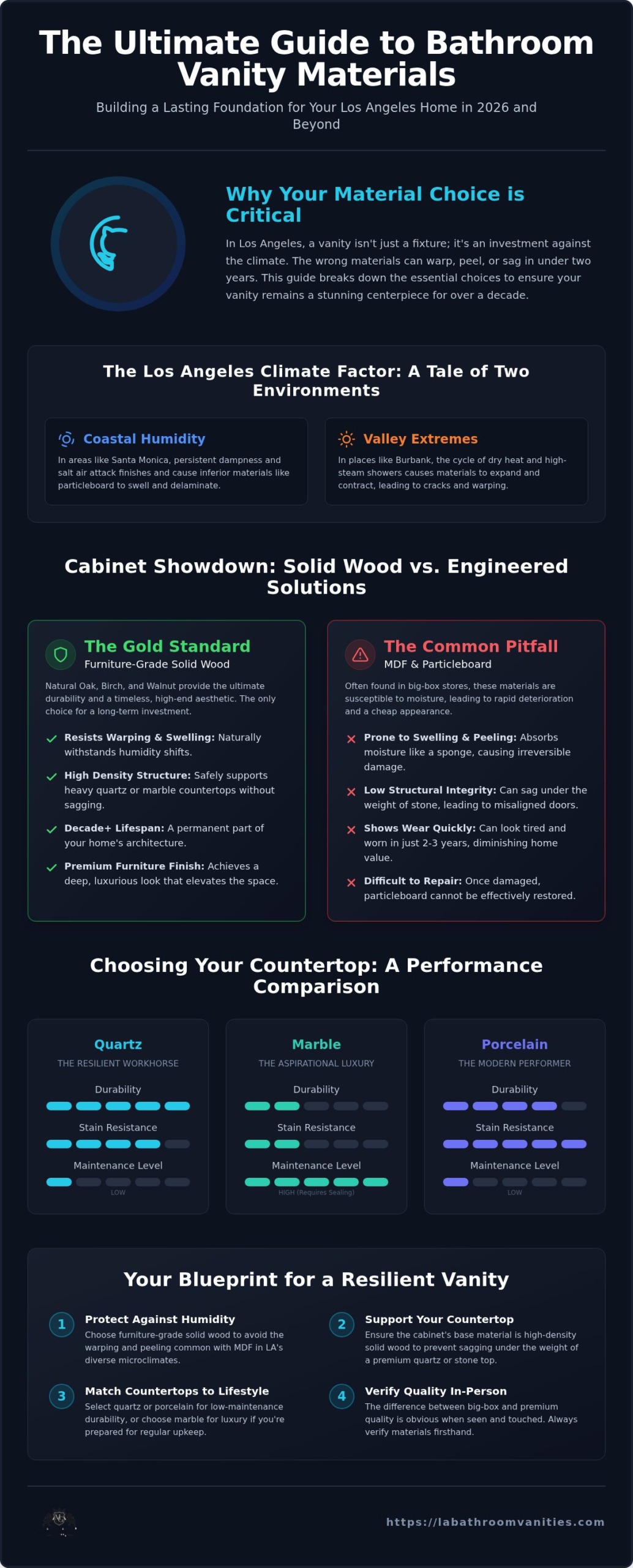
The LA humidity factor is a real challenge that many homeowners overlook until it’s too late. If you’re remodeling a coastal home in Santa Monica, you’re battling salt air and persistent dampness that can cause inferior materials to swell or peel. Meanwhile, in desert-adjacent areas like Burbank, the extreme dry heat outside combined with high-steam showers inside creates a brutal cycle of expansion and contraction. Finding the best material for bathroom vanity construction means selecting surfaces that act as a bridge between contemporary aesthetics and classic quality. When your material choice is right, it transforms a functional fixture into a stunning statement piece that offers immediate aesthetic validation to every guest who enters your home.
The 30-Inch Footprint: Why Material Density Matters
A 30-inch frame may seem modest, but it often carries the immense weight of a premium quartz or marble top. If the base material lacks sufficient density, the structural integrity can begin to fail, leading to misaligned doors or sagging frames. We prioritize furniture-grade construction because it ensures your cabinet doesn’t buckle under the pressure of high-quality stone. This is especially vital in high-traffic guest bathrooms where the vanity faces constant use. You need a material that balances storage capacity with structural thickness to ensure your investment lasts for 10 years or more without showing wear.
Los Angeles Architectural Trends for 2026
In 2026, we’re seeing a beautiful rise in “Organic Industrial” textures throughout local design circles. This trend pairs raw, natural wood grains with sleek, modern hardware to create a space that feels both grounded and sophisticated. Whether you’re updating a traditional bungalow or a modern estate, choosing a material that complements various bathroom vanity sizes across your home creates a cohesive, professional look. By selecting resilient materials that mimic natural textures, you can achieve an aspirational luxury style that remains incredibly easy to maintain, regardless of your specific price point.
The Best Cabinet Materials: Solid Wood vs. Engineered Solutions
Why do some vanities feel like a permanent part of your home’s architecture while others feel like temporary fixtures? The answer lies beneath the surface. For over 15 years, Milan Gallery Bathroom Vanities has championed furniture-grade construction because we know that the best material for bathroom vanity bases must withstand thousands of steam cycles without flinching. While big-box retailers often rely on thin particleboard, we focus on materials that offer the practical security of a reliable investment. Choosing between solid wood and engineered solutions isn’t just a budget decision; it’s about matching the material to your home’s specific needs and your own aesthetic discernment.
Our “Anti-Warp” secret doesn’t just stop at the wood choice. It’s the multi-layer paint and stain finishing process that creates a nearly impenetrable barrier against moisture. We also believe that the luxury experience is defined by the mechanical materials you touch every day. This is why high-quality soft-close hardware is a non-negotiable standard, ensuring that every drawer glide feels as smooth and silent as a high-end spa. If you are ready to see these textures in person, you can explore our exclusive inventory to find the perfect match for your creative vision.
Solid Wood: The Lifetime Investment
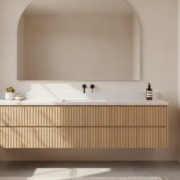
Natural Oak, Birch, and Walnut are the titans of the bathroom world. Oak offers a timeless, open-grain texture that feels incredibly grounded, while Birch and Walnut provide a tighter, more contemporary finish. These dense hardwoods are essential when you move into larger territory, such as 48-inch bathroom vanities. A larger unit requires the structural “backbone” that only solid wood can provide to prevent sagging under heavy stone tops. To keep these finishes pristine, a simple wipe-down after a steamy shower is all it takes to maintain that showroom glow for a decade or more.
High-Density Fiberboard (HDF) vs. Standard MDF
If you’re looking for a sleek, painted finish on a budget, you’ll likely encounter HDF and MDF. It’s vital to understand the density differences here. Standard MDF is prone to swelling if water seeps through the seams, but High-Density Fiberboard (HDF) is packed much tighter, offering significantly better moisture resistance. We use premium veneers on our engineered pieces to achieve high-end looks that are indistinguishable from solid wood. Regardless of the base material, we prioritize reinforced joints and corner blocking because a vanity is only as strong as its weakest connection point. This commitment to quality ensures that even our more accessible options provide the aesthetic validation you deserve.
Countertop Materials: Comparing Quartz, Marble, and Porcelain
If the cabinet base is the structural skeleton of your remodel, isn’t the countertop the face that greets you every morning? While we’ve established that furniture-grade wood is the best material for bathroom vanity bases, the surface you choose determines how much time you’ll spend cleaning versus how much time you’ll spend admiring your reflection. In 2026, the Los Angeles market has moved beyond simple aesthetics; our clients now demand surfaces that can survive a spilled bottle of toner or a hot curling iron without leaving a permanent scar. We’re here to help you navigate these choices, transforming a potentially stressful decision into a creative journey that secures the long-term value of your home.
For busy families in Burbank and Glendale, Quartz remains the undisputed low-maintenance king. It’s an engineered marvel that offers the look of natural stone without the porous vulnerabilities. If you’re designing a high-end Malibu retreat, you might find that Carrara Marble provides the timeless luxury and aesthetic validation that only natural veining can offer. However, we’re seeing a massive surge in porcelain slabs for 2026. These ultra-durable surfaces allow for seamless, large-format designs that are virtually impervious to heat and scratches. Even granite is making a sophisticated comeback, specifically in “Leathered” finishes that provide a tactile, matte texture that hides fingerprints and water spots beautifully.
The Battle of the Stones: Durability vs. Style
When you’re evaluating the best material for bathroom vanity tops, you must consider your daily habits. Quartz wins the battle for stain resistance, making it perfect for households where skincare routines involve oils or pigments that might etch natural stone. Marble, while breathtaking, requires a commitment to regular sealing and a bit of caution with acidic products. If you can’t imagine your life without the cool touch of real stone, the trade-off in maintenance is often worth the emotional reward of owning a unique piece of Earth’s history. Heat resistance is another factor; while quartz is tough, natural stone and porcelain can handle high-heat styling tools with even greater ease.
Selecting the Right Thickness and Edge
The visual weight of your vanity is heavily influenced by the thickness of the slab. A 2cm top offers a sleek, contemporary profile that works well in minimalist designs, whereas a 3cm top adds a sense of permanence and grandeur to a 30-inch vanity. In Los Angeles, mitered edges are currently the most popular profile, creating the illusion of a massive, thick block of stone without the excessive weight. To create a truly cohesive master suite, consider pairing your countertop material with one of our freestanding bathtubs. This synergy of materials ensures your bathroom doesn’t just look like a collection of fixtures, but a curated wellness space that will impress every guest who enters.
Material Considerations for Freestanding vs. Wall-Mount Styles
Does the installation style of your cabinetry change which materials you should prioritize? Absolutely. While we have already explored why furniture-grade wood is the gold standard for durability, the way that wood is engineered must adapt to whether your vanity sits firmly on the floor or hangs elegantly from the wall. We believe that your choice between a freestanding or wall-mount unit should be a creative journey that combines the excitement of high-end aesthetics with the practical security of a long-term investment. Each style places unique stressors on the cabinet frame, making it essential to match the structure to the design.
Wall-Mount (Floating) Material Demands
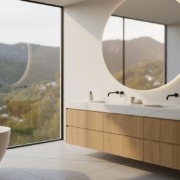
Floating vanities are the darlings of contemporary Los Angeles design, but they demand a specific structural rigor that many big-box models simply cannot provide. When you choose a wall-mount style, the back panel becomes the most critical component of the entire unit. You need a lightweight but incredibly strong plywood or solid wood hybrid that can handle the cantilevered stress of a heavy stone top. This is the best material for bathroom vanity construction in floating designs because it resists sagging and ensures the unit remains level for a decade or more.
Beyond structural integrity, these materials must allow for clean plumbing access. High-quality hybrids allow your contractor to customize internal storage without compromising the unit’s strength. This minimalist, high-tech vibe is often paired with smart toilets to create a sleek, “Electric Ready” bathroom that meets the 2025 California Building Standards Code. It’s a look that feels both aspirational and incredibly functional for modern LA living.
The Freestanding Aesthetic
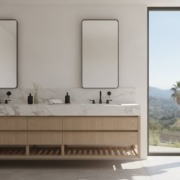
If you are aiming for a historic Pasadena remodel or a “Furniture-Grade” look in a traditional home, freestanding vanities offer the ultimate aesthetic validation. These units rely on tapered legs and solid bases to distribute weight, allowing you to maximize storage with full-depth solid wood drawers. Unlike floating units, freestanding styles can utilize heavier, denser wood cuts throughout the entire frame. Many of our 2026 designs feature an open bottom shelf, which is the perfect place to showcase textured towels and natural baskets, adding a layer of “Organic Modern” warmth to a guest bath.
For homeowners in Santa Monica and Malibu, the hardware materials are the finishing touch that defines the luxury experience. We are seeing a strong trend toward warm Brass and Matte Black finishes that contrast beautifully against natural wood grains. If you’re ready to transform your space into a wellness sanctuary, explore our full collection of wall-mount and freestanding styles to find the perfect fit for your Los Angeles home. Whether it’s the sleek lines of a floating unit or the traditional charm of a solid base, the right material ensures your choice remains a source of pride for years to come.
Experience Premium Materials at the Milan Gallery Sun Valley Showroom
Why gamble on a high-ticket investment by relying solely on a digital screen? While online photos can offer a glimpse of style, they often fail to capture the tactile reality of a deep wood grain or the cool, dense weight of a premium stone top. We invite you to step into the largest bathroom vanity showroom in the Los Angeles area, where the discovery of the best material for bathroom vanity units becomes a sensory experience rather than a digital guessing game. At our Sun Valley location, you can run your hands over furniture-grade solid wood and witness the depth of our multi-layer finishes in person, ensuring your choice provides the aesthetic validation you deserve.
Our consultants bring over 15 years of local renovation experience to every conversation. We understand the specific challenges of building in Malibu, Calabasas, or Encino, and we take immense pride in helping you find the practical security of a reliable investment. Because we offer exclusive designs with wholesale pricing, you can achieve an aspirational luxury look that remains accessible. We don’t just sell functional fixtures; we act as your dedicated partner in transforming a potentially overwhelming shopping trip into an inspiring creative journey. If you want a space that impresses your social circle while standing the test of time, seeing these materials in person is the essential first step.
Serving the Greater Los Angeles Area
Do you have a contractor ready to start a project in Woodland Hills, Valencia, or Sherman Oaks? We maintain deep roots in the local community, providing reliable delivery and support to neighborhoods across the region. By partnering directly with LA contractors, we ensure that material quality matches your project deadlines and the latest 2025 California Building Standards. Having a local partner is essential for high-ticket home improvements. It provides the immediate confidence that only a long-standing regional fixture can offer, making the renovation process feel neighborly rather than intimidating.
Your Material Discovery Starts Here
What should you bring to your personal consultation? We recommend arriving with your site measurements, current tile samples, and any inspiration photos that capture your creative vision. Our experts will help you navigate the sea of options to identify the best material for bathroom vanity cabinets that suits your specific lifestyle and humidity concerns. We’ll guide you through the technical nuances of stone thickness and wood density until you find your perfect match. Visit our Sun Valley showroom today or browse our collection online to start your home’s transformation into a stunning wellness sanctuary.
Secure Your Home’s Aesthetic Future Today
You now possess the technical discernment to distinguish between a temporary fixture and a lifetime investment. By mastering the differences between furniture-grade solid wood and high-performance engineered stones, you’ve ensured your Los Angeles remodel will remain a source of immense pride for a decade or more. You understand that the best material for bathroom vanity construction must balance the weight of premium countertops with the structural demands of your specific installation style, whether you’re opting for a sleek wall-mount or a classic freestanding base.
With 15+ years of Los Angeles remodeling expertise, we’ve curated an inventory that prioritizes furniture-grade construction and silent soft-close technology in one of the largest showrooms in Sun Valley. We believe that your home deserves the aesthetic validation of a high-end spa and the practical security of a reliable investment. Don’t leave your vision to chance or settle for big-box compromises when expert guidance is just a visit away. Explore Our Exclusive Collection of High-Quality Vanities today. We’re excited to partner with you as you transform your bathroom into a stunning wellness sanctuary that will impress every guest who enters.
Frequently Asked Questions
What is the most durable material for a bathroom vanity cabinet?
Furniture-grade solid wood, specifically dense species like Oak, Birch, and Walnut, is the most durable material for a bathroom vanity cabinet. These hardwoods provide the essential structural integrity needed to support heavy stone tops without sagging or warping over time. While budget alternatives might look similar in photos, they often lack the internal reinforcement and professional-grade finishes that allow a solid wood base to remain a permanent part of your home’s architecture.
Is solid wood better than MDF for a bathroom with high humidity?
Solid wood is significantly better than standard MDF for bathrooms with high humidity because it doesn’t swell or disintegrate when exposed to persistent steam. If you’re working with a specific budget, High-Density Fiberboard (HDF) is a viable alternative, but it must be protected by multi-layer moisture-resistant finishes. We’ve found that furniture-grade wood remains the gold standard for LA coastal homes in Santa Monica where damp salt air is a daily reality.
What is the best material for a bathroom vanity countertop if I want low maintenance?
Quartz is the best material for bathroom vanity countertops if your primary goal is a stress-free, low-maintenance lifestyle. Since it’s an engineered stone, it’s completely non-porous and never requires the periodic sealing that marble or granite demands. It easily resists stains from spilled skincare products or colorful toothpastes, making it the ideal choice for busy families in Glendale and Burbank who want aspirational luxury without the extra chores.
Do 30-inch vanities come with the countertop and sink included?
Yes, most of our 30 Inch Single Sink Vanity models are designed as complete sets that include the stone countertop and a pre-installed ceramic undermount sink. This “all-in-one” approach ensures that the countertop is structurally matched to the cabinet base while taking the guesswork out of your design process. It’s a convenient way to achieve a high-end, coordinated look that provides immediate aesthetic validation once the installation is complete.
How do I prevent my wood vanity from warping in Los Angeles humidity?
You can prevent warping by selecting a vanity with a multi-layer paint or stain finish and ensuring your bathroom has an efficient exhaust fan. This specialized finish acts as a nearly impenetrable barrier against the humidity cycles common in the San Fernando Valley. Choosing furniture-grade wood is the best material for bathroom vanity longevity because it’s naturally more stable than cheap particleboard when faced with our local environmental shifts.
Can I install a marble countertop in a high-traffic kids bathroom?
While you can install marble in a kids’ bathroom, it’s generally not recommended because natural stone etches easily when it comes into contact with acidic soaps or toothpaste. For a high-traffic area used by children, the maintenance can become overwhelming. We suggest choosing quartz or porcelain slabs that mimic the timeless look of Carrara marble while providing the practical security of a scratch-resistant and stain-proof surface.
What is the standard depth for a 30-inch vanity in an LA apartment?
The standard depth for a 30-inch vanity is typically 21 to 22 inches, which fits comfortably in most standard LA apartment layouts. This depth allows for full-extension drawers and ample storage for toiletries without obstructing your bathroom’s walking path. If you’re working with an exceptionally tight space, we also offer slim-profile options, but the 21-inch standard remains the most popular for balancing capacity and comfort.
Why should I visit a showroom instead of buying a vanity online?
Visiting a showroom is the only way to verify the tactile density of the wood and the true depth of a stone’s veining before making a major investment. At our Sun Valley location, you can test the soft-close hardware and experience the furniture-grade quality for yourself. It transforms a risky online purchase into a guided personal consultation where you can receive expert confirmation of your design choices from local specialists.