Floating Vanity Guide: Best Materials for Modern LA Styles
If you could strip away the bulk of a traditional cabinet to create a weightless, modern sanctuary, would your walls actually be strong enough to hold that vision? Many Los Angeles homeowners are captivated by the sleek, spa-like allure of a wall-mounted design, yet they’re often haunted by the fear of a heavy unit sagging or pulling away from the studs. It’s a common worry, especially when you’re trying to decide between the natural beauty of solid wood and the moisture resistance of high-grade plywood in a humid master suite. You want that breathtaking focal point, but you also need the peace of mind that comes with a secure, long-term investment.
The good news is that achieving this architectural illusion is entirely possible with the right technical knowledge. This guide will help you master the specific bathroom vanity materials and structural requirements needed to ensure your remodel is as durable as it is beautiful. We’ll walk through the essential material choices that withstand daily SoCal life, from premium quartz tops to high-tensile frames. By the end, you’ll have the confidence to select a sophisticated unit that maximizes your floor space without ever compromising on storage or structural safety.
Key Takeaways
- Understand why the minimalist “hover” effect is transforming bathrooms across Santa Monica and other desirable Los Angeles neighborhoods into high-end, spa-like retreats that maximize your floor space.
- Learn how to navigate the technical differences between bathroom vanity materials to find the perfect balance of solid wood luxury and moisture-resistant plywood performance.
- Identify why engineered quartz remains the preferred choice for Los Angeles designers due to its stain resistance, while natural marble provides the ultimate aesthetic validation for luxury homes.
- Master the structural secrets behind a secure wall-mounted installation, including how internal steel brackets prevent sagging in large 72-inch or 84-inch double units.
- Discover the benefits of a hands-on inspection at the Milan Gallery Bathroom Vanities showroom in Los Angeles, where you can feel the quality of dovetail joinery and material weight before you commit to your remodel.
The Rise of Floating Bathroom Vanities in Modern Los Angeles Design
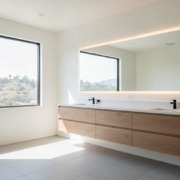
Have you ever walked into a bathroom and felt an immediate sense of calm and openness? That’s the power of the floating vanity. Traditionally, Vanity cabinets rested firmly on the floor, but the modern Los Angeles aesthetic has shifted toward a wall-mounted design that creates an open, “floating” floor space. This minimalist approach is more than just a trend; it’s a deliberate architectural choice that makes a standard North Hollywood bathroom feel nearly twice as large. By exposing the floor all the way to the wall, you remove the heavy visual anchors that usually clutter a small room. This spatial hack is precisely why homeowners in Santa Monica and West Hollywood are obsessed with the “hover” effect. It’s also the ultimate solution for the booming Accessory Dwelling Unit (ADU) market, where every square inch of floor space is a precious commodity.
Spatial Benefits for Urban Southern California Living
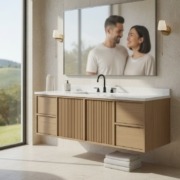
Living in a Sherman Oaks condo or a Burbank apartment often means dealing with tight layouts. A floating unit breathes life into these spaces. Cleaning becomes a breeze because there are no awkward corners or cabinet bases where dust can hide; you can simply sweep or mop right underneath the unit. Beyond the practicalities, this design choice creates a hotel-inspired “spa” atmosphere that is highly sought after in the current market. High-end buyers look for these details, and selecting the right bathroom vanity materials can significantly increase your property’s resale value. It transforms a functional room into a retreat that feels intentionally designed rather than just assembled.
Aesthetic Versatility: From Malibu Coastal to Silver Lake Industrial
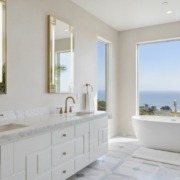
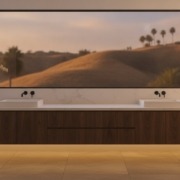
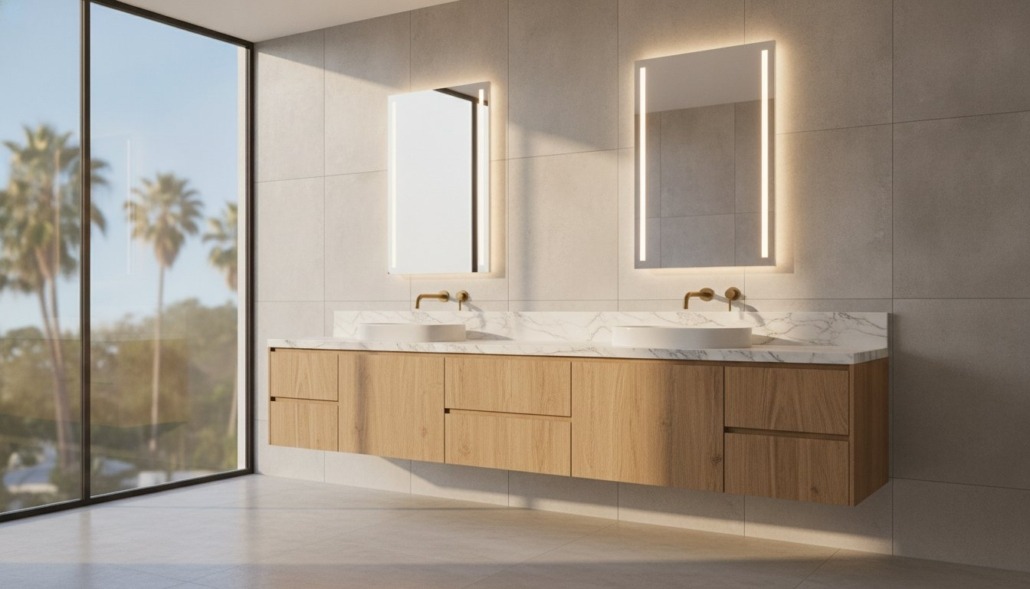
Your choice of bathroom vanity materials does more than provide storage; it defines your home’s entire architectural vibe. Whether you’re aiming for a breezy Malibu Coastal look with light oak or a moody Silver Lake Industrial feel with matte black finishes, the floating design provides a clean canvas. These fixtures interact beautifully with modern floor lighting or LED mirrors, casting soft glows that highlight the texture of your floor tiles. It’s the undisputed centerpiece of a 2026 high-end bathroom renovation, offering a sleek profile that traditional freestanding units simply can’t match. When you lift the vanity off the floor, you invite a sense of luxury and airiness that defines the modern California lifestyle.
Cabinet Construction: Comparing Bathroom Vanity Materials for Longevity
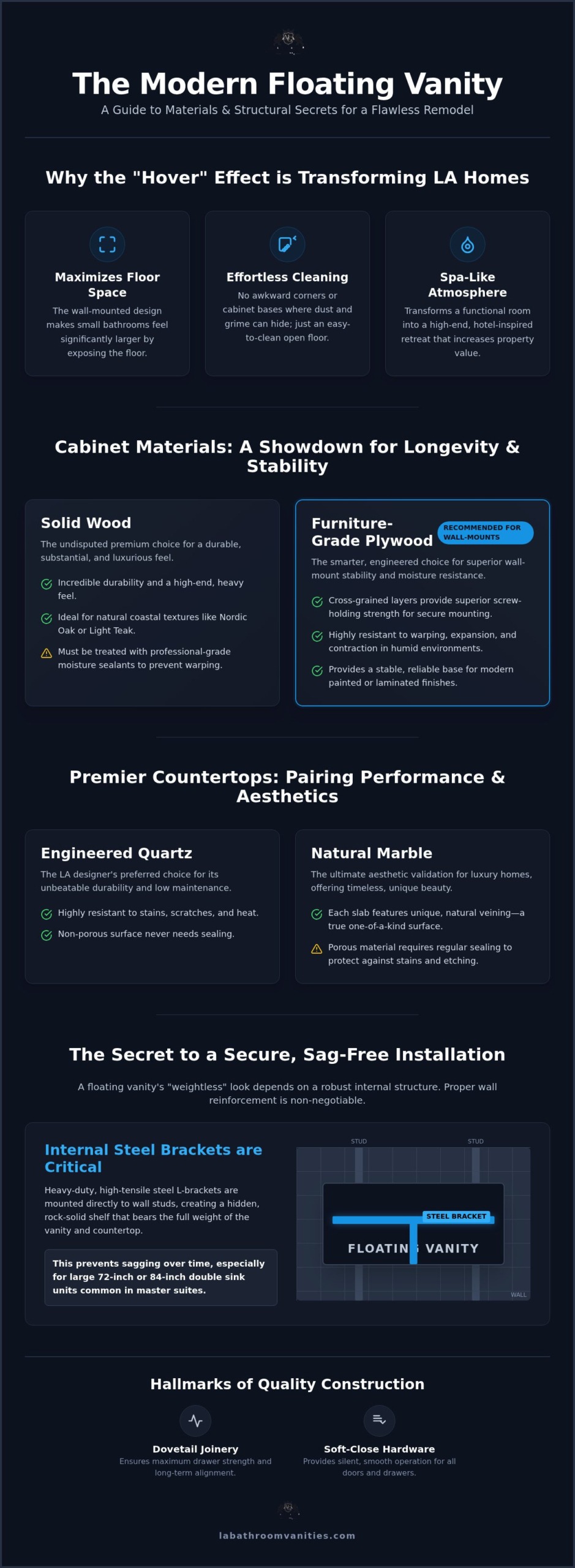
Have you ever wondered why some vanities seem to age gracefully while others start to sag within months? When you’re choosing bathroom vanity materials, you’re really choosing the long-term health of your home’s most humid room. Solid wood remains the undisputed premium choice for luxury master suites because of its incredible durability and substantial feel. However, the steam-heavy environments of Sherman Oaks demand a construction that won’t warp or expand. This is why we prioritize high-quality markers like dovetail joinery and soft-close hardware. These features ensure that the drawers stay aligned and the unit remains a silent, sturdy partner in your morning routine for years to come.
Solid Wood and Natural Coastal Textures
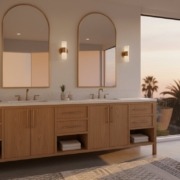
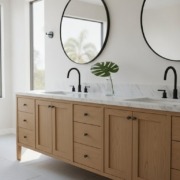
The rise of Nordic White Oak and Light Teak has brought a fresh, Malibu-inspired energy to Los Angeles homes. These natural coastal textures, often featuring fluted or reeded fronts, add a level of architectural depth that flat panels simply can’t match. If you’re leaning toward natural wood, it’s vital to ensure the material is treated with professional-grade moisture sealants. This protection allows the wood’s organic beauty to shine through while defending it against the daily humidity of a busy household. It’s about finding that perfect bridge between raw, outdoor beauty and the practical needs of a functional bathroom.
Engineered Solutions: MDF and Plywood for Modern Finishes
While solid wood is beautiful, furniture-grade plywood is often the smarter choice for wall-mount stability. Because plywood consists of cross-grained layers, it holds the heavy-duty mounting screws required for a floating unit much better than solid timber. When evaluating bathroom vanity materials for their engineered properties, you’ll find that High-Density Fiberboard (HDF) and MDF are also excellent choices for specific aesthetics. These materials provide a perfectly smooth, non-porous surface that is ideal for multi-layer lacquer finishes. This creates a resilient, “perfect matte” shield that is particularly effective in high-traffic guest bathrooms where durability is the top priority. If you want to see how these different builds feel in your own hands, you can view our full inventory of expertly crafted units online or visit our Sun Valley showroom for a personal consultation.
Countertop Materials: Pairing Quartz, Marble, and Porcelain
Have you considered how your choice of countertop serves as the final, defining touch for your bathroom’s personality? While the cabinet provides the structure, the surface is where the daily interaction happens. In the world of bathroom vanity materials, engineered quartz remains the undisputed “King of LA” for good reason. It offers a perfectly uniform look and incredible stain resistance that fits the fast-paced SoCal lifestyle. If you’re a homeowner who values aesthetic validation and social prestige, natural marble like Carrara or Calcatta remains a timeless choice. These stones provide an organic allure that says you’ve invested in the very best for your home. For those chasing an ultra-modern, monolithic vibe, porcelain slabs and integrated sinks are surging in popularity because they create a seamless, high-durability surface that looks like a single piece of carved stone.
Weight Considerations for Wall-Mount Bases
If you’re opting for a large 60 inch or 84 inch double sink vanity, you must account for the “dead load” of your stone top. A floating unit relies entirely on its wall anchors, so the weight of your countertop material is a critical safety factor. Quartz is often the ideal middle ground because it provides the luxury weight of natural stone without the extreme structural demands of thicker marble slabs. When you’re planning a double sink layout, balancing the stone’s thickness with the unit’s mounting requirements is essential to prevent any future sagging. This technical nuance is exactly why we encourage visitors to feel the weight of these materials in person before making a final decision.
Finish and Hardware Coordination
The interaction between your countertop and your fixtures is what truly elevates a modern bathroom vanity design. If you’re aiming for a “Warm Modern” aesthetic, try matching white quartz with brushed gold hardware to create a soft, inviting glow. Conversely, if you prefer a moody, industrial Glendale vibe, pairing matte black faucets with a reeded wood base and a dark porcelain top creates a striking architectural statement. Your choice of bathroom vanity materials should act as a cohesive system where the stone highlights the grain of the wood and the hardware adds the final sparkle. This collaborative approach to design ensures that your finished project feels like a professionally curated space rather than a collection of separate parts.
Structural Integrity: Prepping Your Walls for a Floating Vanity
Why do so many homeowners hesitate before committing to a wall-mounted design? The fear of a heavy unit sagging or, worse, pulling away from the studs is a common concern that we hear every day. To achieve that breathtaking, gravity-defying look, you have to understand that “floating” is actually a carefully engineered illusion. The choice of bathroom vanity materials isn’t just an aesthetic one; it’s a structural one. High-quality builds utilize internal steel brackets and reinforced plywood frames to distribute weight evenly. Without this internal support, the sheer force of the unit would eventually stress the wall fasteners beyond their limits. By choosing the right materials from the start, you’re investing in the long-term safety and beauty of your home.
Consider the sheer weight of a 72-inch double sink vanity. When you factor in a thick quartz countertop, two heavy basins, and the weight of the water when the sinks are full, you’re looking at a massive load. This isn’t a job for standard drywall anchors. You need a foundation that is as rock-solid as the design is airy. This structural preparation is what separates a DIY headache from a professional, high-end renovation that stands the test of time.
Wall Prep and Structural Blocking Requirements
Standard drywall simply cannot support the shear force generated by a wall-mounted unit. This is why we advocate for the “2×6 Rule.” Your contractor must install horizontal 2×6 wood blocking between the existing vertical wall studs at the exact height where the vanity will hang. This creates a solid, continuous surface for the heavy-duty mounting screws to bite into. When you’re working with your LA contractor, ensure they’re aware of the specific bathroom vanity materials you’ve chosen, as a solid wood unit with a marble top requires more reinforcement than a smaller plywood model. Following these structural checklists before the unit arrives will save you from the nightmare of a failed installation and ensure your project meets local building codes.
Plumbing Concealment for a High-End Look
Achieving the “Floating” illusion requires keeping the wall area beneath the vanity completely pristine. This means the traditional floor-based plumbing has to go. You’ll likely need to move your drain and supply lines higher up into the wall cavity so they stay hidden behind the vanity’s back panel. Modern units often feature U-shaped drawer cutouts designed specifically to hide the “P-Trap” without sacrificing all your storage space. For a 30-inch single unit, you might have more flexibility, but for a 48-inch or larger unit, precise plumbing placement is non-negotiable for a high-end look. If you want to ensure your plumbing and cabinetry work in perfect harmony, explore our collection of wall-mount vanities and find a design that fits your specific layout.
Finding Your Perfect Floating Vanity at Milan Gallery
How do you know if a vanity is truly the right fit for your home without feeling the grain of the wood or the weight of the stone in your own hands? While digital guides provide the foundation, nothing replaces the physical experience of inspecting bathroom vanity materials in person. At Milan Gallery Bathroom Vanities, we’ve spent over 15 years acting as a bridge between contemporary aesthetics and classic quality for the Los Angeles community. Our Sun Valley showroom is one of the largest in the region, offering you the rare opportunity to see how light hits a quartz surface or how a solid wood frame feels compared to furniture-grade plywood. Whether you’re hunting for sleek 48-inch bathroom vanities for a guest suite or a massive 84-inch double unit for a primary remodel, we provide luxury designer aesthetics at wholesale pricing that respects your budget.
The Milan Gallery Bathroom Vanities Showroom Experience
Visiting us in Sun Valley allows you to move beyond the specs and dive into the tactile details that define a high-end renovation. You can pull out the drawers to inspect the authentic dovetail joinery, test the resistance of the soft-close mechanisms, and compare various finish textures under professional lighting. Our specialists are on hand to help you navigate complex bathroom vanity sizes and material selections, ensuring your choice matches the structural requirements of your specific wall. If you’re looking to create a fully cohesive master suite, you can even pair your floating unit with our selection of freestanding bathtubs. We take immense pride in serving the entire LA basin, from the coastal estates of Calabasas to the historic homes of Pasadena, providing the expert guidance you need to build with confidence.
Completing Your Modern Transformation
A floating vanity is often the first step in a larger tech-forward bathroom evolution. To truly lean into the minimalist aesthetic, consider pairing your new wall-mounted unit with an integrated smart toilet. This combination eliminates floor-based clutter and emphasizes the clean lines of your modern design. Adding an LED mirror provides the perfect functional companion, casting a shadow-free glow that highlights your choice of bathroom vanity materials. Once you’ve curated your perfect combination, we handle the delivery logistics to get your fixtures safely to your doorstep. While we don’t provide installation, we can provide all the technical specifications your local LA installer needs to ensure a flawless, secure mount. Your journey from a potentially overwhelming shopping trip to an inspiring creative success is our top priority.
Elevate Your Los Angeles Bathroom with Confidence and Style
Transforming your bathroom into a modern sanctuary is about more than just picking a pretty cabinet; it’s a strategic marriage of high-end design and structural integrity. You’ve learned that the secret to a successful “hover” effect lies in the technical nuances of your bathroom vanity materials, from the moisture resistance of furniture-grade plywood to the weight-bearing capacity of engineered quartz. Whether you’re prepping your walls with structural blocking or selecting a Malibu-inspired finish, every choice contributes to the long-term success of your remodel.
With over 15 years of expert guidance in the Los Angeles market, Milan Gallery is here to help you navigate these decisions with total clarity. Our Sun Valley showroom is one of the largest in Southern California, featuring a massive in-stock selection of modern vanities ranging from 30 to 84 inches. We invite you to Browse the Milan Gallery Floating Vanity Collection or Visit Our Sun Valley Showroom Today! to see the quality for yourself. Your dream spa-like bathroom is well within reach, and we can’t wait to help you bring it to life.
Frequently Asked Questions
What are the best bathroom vanity materials for high humidity?
Furniture-grade plywood and High-Density Fiberboard (HDF) with multi-layer lacquer finishes are the top choices for high-humidity environments. These materials are engineered to resist the warping and expansion that can plague solid wood in a steam-heavy master suite. If you prefer the look of natural timber, ensure it’s treated with a professional-grade sealant. Selecting resilient bathroom vanity materials ensures your investment remains pristine even after years of daily hot showers.
Are floating vanities sturdy enough for a family bathroom with kids?
Yes, floating vanities are exceptionally sturdy when installed with proper structural blocking and high-tensile wall anchors. While the design looks weightless, the internal steel brackets are engineered to support hundreds of pounds. You don’t have to worry about the unit sagging if your contractor installs 2×6 horizontal blocking between the studs. This creates a rock-solid foundation that handles the daily bumps and leans of a busy household with ease.
How high should a floating bathroom vanity be mounted from the floor?
The standard mounting height for a floating vanity is between 34 and 36 inches from the floor to the top of the countertop. This “comfort height” is widely preferred in modern Los Angeles renovations as it reduces the need to lean over the sink. Since the unit is wall-mounted, you have the creative agency to adjust this height slightly based on your family’s needs. Keeping a 10 to 12-inch gap beneath the unit maximizes the airy, spa-like aesthetic.
Do I need to move my plumbing to install a wall-mount vanity?
You will likely need to relocate your plumbing lines higher into the wall to achieve the clean, “no-pipe” appearance of a floating design. Traditional floor-based supply lines and drains will be visible beneath the unit, breaking the minimalist illusion. Most modern wall-mount units feature U-shaped drawer cutouts designed specifically to accommodate a P-trap. Moving these lines during the rough-in phase ensures your plumbing remains completely hidden behind the vanity’s back panel.
Can I install a floating vanity on a wall with metal studs?
You can install a floating vanity on a wall with metal studs, but it requires significant additional reinforcement compared to wood studs. Metal studs alone lack the pull-out strength to support the heavy shear force of a vanity and stone top. Your contractor must install heavy-duty wood blocking or specialized steel plates between the metal studs. This provides a secure biting surface for the mounting hardware, ensuring your bathroom vanity materials stay firmly attached to the wall.
How do I maximize storage in a floating vanity with drawers?
Maximizing storage in a floating unit involves choosing designs with full-extension drawers and integrated organizers. While you lose the floor-level cabinet space of a freestanding unit, deep drawers allow you to utilize the entire depth of the vanity. Look for units that feature hidden inner drawers for smaller toiletries. Utilizing vertical drawer dividers and tiered organizers helps keep your essentials accessible without cluttering the sleek, minimalist exterior of your modern focal point.
What is the most durable countertop material for a bathroom vanity?
Engineered quartz is widely considered the most durable countertop material for a bathroom vanity due to its non-porous surface and stain resistance. Unlike natural marble, quartz doesn’t require periodic sealing and stands up to spilled makeup or harsh cleaning agents without etching. It provides the luxury weight and aesthetic validation of stone without the high-maintenance requirements. This makes it the ideal pairing for a high-traffic master suite where longevity and performance are the top priorities.
Is a 72-inch floating vanity too heavy for a standard residential wall?
A 72-inch floating vanity is not too heavy for a residential wall if the proper structural prep is completed before installation. These larger double units can weigh several hundred pounds when the sinks are full. You must use horizontal 2×6 blocking across multiple studs to distribute this weight safely. When engineered correctly, your wall becomes a silent, sturdy partner that supports the massive load of the unit and its premium stone countertop without any risk of sagging.