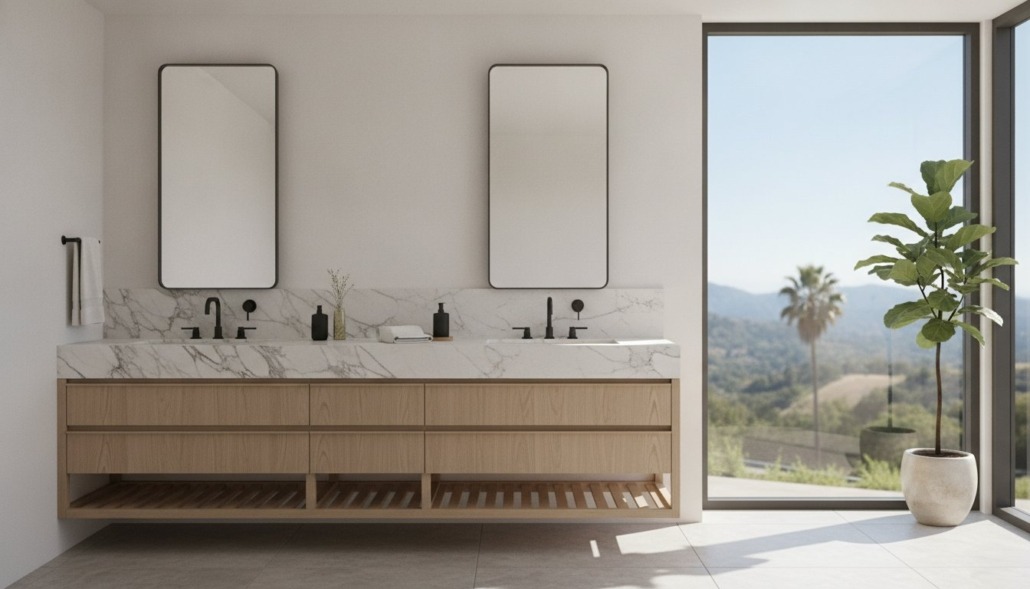
Marble vs. Quartz Vanity Top Durability: The Ultimate 2026 Comparison Guide
Imagine you’ve just unveiled your gorgeous new master suite in Los Angeles, only to feel a pang of anxiety every time a guest reaches for the faucet with wet hands. You’ve likely heard a dozen different opinions on marble vs quartz vanity top durability, leaving you wondering if that exquisite slab of Carrara is a ticking time bomb or if quartz is truly the indestructible hero it’s claimed to be. We understand that choosing a vanity isn’t just about picking a color; it’s about making a high-end investment that can actually survive the reality of Southern California’s hard water and the frantic pace of a morning rush.
This guide delivers the definitive truth about how these surfaces perform under pressure, so you can stop second-guessing your design dreams and start enjoying your home. You’ll discover why quartz currently outsells marble eight to one for residential use and how the 2026 California Building Standards Code might influence your renovation journey. We’re going to compare the technical resilience of a Mohs hardness of 7 against the classic elegance of natural stone; ensuring you walk away with the confidence to choose a surface that will impress your social circle and stand the test of time.
Key Takeaways
- Discover the fundamental differences between natural metamorphic marble and engineered quartz resins to determine if your heart leans toward organic artistry or modern resilience.
- Master the technical side of marble vs quartz vanity top durability by comparing their Mohs hardness ratings, giving you the clarity needed to protect your investment from scratches and chips.
- Evaluate the maintenance commitment of each material, from the routine sealing required for porous marble to the non-porous convenience that makes quartz a favorite for busy households.
- Tailor your choice to your specific Los Angeles lifestyle by considering how local hard water and bathroom traffic patterns dictate the long-term performance of your new vanity.
- Transform your renovation anxiety into creative excitement by learning how to evaluate full-sized slabs in person for the ultimate peace of mind before you buy.
The Marble vs. Quartz Durability Debate: Nature’s Art or Engineered Strength?
When you step into the 2026 Los Angeles luxury market, you’ll find that the conversation around bathroom design has shifted from pure aesthetics to a deeper focus on material longevity. If you’re currently remodeling, you’ve likely found yourself caught in the middle of the marble vs quartz vanity top durability debate; a choice that defines whether your bathroom remains a pristine sanctuary or becomes a source of maintenance stress. To make the right decision, we must first look at what these materials actually are. Marble is a metamorphic natural stone, primarily composed of calcite, which gives it those iconic, flowing veins that have symbolized luxury for centuries. On the other hand, quartz is a sophisticated Engineered Stone that blends roughly 90 to 94 percent ground natural stone with high-performance polymer resins.
The fundamental difference between these two lies in their porosity. Think of marble like a sponge on a microscopic level; it’s filled with tiny interconnected pores that can drink up liquids if they aren’t sealed perfectly. Quartz is engineered to be entirely non-porous, meaning the resins act as a permanent shield that prevents liquids from ever penetrating the surface. This distinction is the cornerstone of why one material might thrive in a quiet guest suite while the other is better suited for a high-traffic family bathroom.
To see how these materials work in harmony with bespoke storage solutions, you can discover Countertops and Cabinetry By Design and explore their portfolio of custom cabinetry and premium stone surfaces.
The Calcite Factor: Why Marble is Chemically Sensitive
Because marble is made of calcium carbonate, it possesses a unique chemical vulnerability that many homeowners don’t realize until it’s too late. When acidic substances like lemon juice, certain toothpastes, or harsh bathroom cleaners sit on the surface, they don’t just leave a stain; they actually dissolve a tiny layer of the stone itself. This leads to a phenomenon known as etching, which many people confuse with staining. While a stain is a pigment that has soaked into the stone’s pores, an etch is physical damage to the stone’s structure. Etching is a chemical reaction that occurs when acidic substances interact with the calcite in the stone, resulting in a dull or cloudy mark that disrupts the surface finish.
The Resin Advantage: How Engineering Solves Natural Weakness
The beauty of modern engineering is that it allows us to take the best parts of natural stone and remove the “stress points” found in nature. During the manufacturing of modern bathroom vanities, the addition of polymer resins creates a surface that is incredibly dense and uniform. Unlike natural marble, which might contain hidden internal fissures or weak spots that could crack under pressure, quartz slabs are factory-controlled for absolute consistency. This process ensures that every inch of your vanity top is just as strong as the next, providing a level of predictable performance that is hard to beat in a busy household. By choosing an engineered surface, you’re essentially opting for a material that has been specifically designed to withstand the spills and splashes of daily life without the constant need for professional intervention.
Comparing Resistance: Scratches, Stains, and the Porosity Factor
How do you measure the true grit of a surface when it’s faced with the daily chaos of a busy Los Angeles household? To settle the marble vs quartz vanity top durability debate, we have to look past the surface level and analyze the four pillars of performance: scratch resistance, stain defense, impact strength, and heat tolerance. While both materials offer a high-end aesthetic, they react very differently to the physical demands of your morning routine. If you’ve ever worried about a dropped bottle of heavy cologne or a forgotten curling iron, understanding these technical differences is the key to a stress-free investment.
The most objective way to compare these materials is through the Mohs scale of mineral hardness. Quartz typically ranks at a 7, making it one of the hardest surfaces available for home use. In contrast, marble is significantly softer, usually falling between a 3 and a 5. This means that common bathroom items like metal tweezers or ceramic trays can easily leave permanent marks on a marble surface. When it comes to impact, there’s a common myth that marble is tougher because it’s a “solid stone.” In reality, marble’s crystalline structure makes it more prone to “bruising” or chipping if a heavy object is dropped on the edge. Quartz, reinforced by flexible resins, absorbs impact much better, though it isn’t entirely invincible.
The Porosity Showdown
Why does marble often get a bad reputation for staining? It comes down to its capillary structure. Under a microscope, marble is full of tiny tunnels that act like a sponge for oils, makeup, and hair dyes. If you spill a bottle of foundation on marble, your “soak time” before a permanent stain sets in is measured in mere minutes. Even the legendary durability of the marble used in national monuments shows that natural stone eventually yields to its environment without constant care. Quartz eliminates this worry entirely with a zero-absorption rate. Because it’s non-porous, you can leave a spill for hours without it penetrating the slab. If you’re looking for a surface that stays pristine with minimal effort, you might want to explore our latest quartz-topped vanities to see how modern engineering simplifies your life.
Heat Resistance: The One Area Where Marble Wins
While quartz dominates in scratch and stain resistance, marble holds a surprising advantage in the face of high temperatures. Marble has a naturally high thermal mass, meaning it can dissipate heat from a hot hair straightener without cracking or scorching. Quartz, however, contains polymer resins that can actually melt or discolor if they come into direct contact with extreme heat. If you’re a quartz user, always use a heat-resistant pad for your styling tools to prevent permanent “burn rings” on your beautiful new top. This is the one trade-off for the otherwise superior resilience of engineered stone.

Maintenance Realities: Why Marble Demands Care While Quartz Offers Convenience
Have you ever wondered why some decades-old bathrooms still look brand new while others seem to age overnight? The answer usually lies in the maintenance routine rather than the material’s initial price tag. When we look at marble vs quartz vanity top durability, the definition of “durability” shifts from physical hardness to how well a surface responds to your lifestyle over five, ten, or twenty years. Marble is a material for the homeowner who finds beauty in a “living” surface and doesn’t mind a bit of ritualistic care. Quartz, by contrast, is the champion of the modern, fast-paced household where convenience is the ultimate luxury.
One significant advantage of marble that often goes unmentioned in the showroom is its ability to be restored. If you accidentally scratch your marble surface or it becomes dull from years of use, a stone restoration expert can often buff and polish the material back to its original factory luster. Quartz is much more difficult to repair. Because it’s an engineered product held together by resin, a deep scratch or a heat-induced scorch mark often requires specialized fillers that rarely match the original pattern perfectly. You are trading marble’s high-maintenance requirements for a material that is harder to damage but also harder to fix once a mistake occurs.
The Sealing Cycle for Natural Stone
If you’ve selected a stunning 48 inch bathroom vanity to serve as the centerpiece of your remodel, you must embrace the sealing cycle to protect that investment. This involves applying a high-quality penetrative sealer that sinks into the stone’s pores to create a invisible chemical barrier against oils and dyes. You can easily perform the “water drop test” to see if your seal is still active; simply place a few droplets of water on the stone and wait ten minutes. If the water beads up, your vanity is protected. If the water soaks in and darkens the stone, it’s time for a fresh coat. While some 2026 products are marketed as “permanent” sealers, most local experts suggest a fresh application every 12 to 24 months for high-use bathrooms.
Chemical Sensitivity: The Enemy of Quartz
It’s a common mistake to assume that quartz is invincible because it’s engineered. While it resists stains beautifully, it has a specific Achilles’ heel: high-pH chemicals. Harsh cleaners like bleach, drain openers, or abrasive scouring pads can chemically “burn” the polymer resins, leaving behind a permanent cloudy haze that no amount of scrubbing can remove. For high-end quartz tops, the gold standard is a pH-neutral cleaner or a simple mixture of mild dish soap and warm water. By avoiding the aggressive chemicals found in many commercial bathroom sprays, you ensure the resin remains clear and the stone’s pigments stay vibrant for the life of your home.
Which Vanity Top Fits Your Los Angeles Lifestyle?
Does your bathroom see the chaotic energy of a three-child morning rush, or is it a quiet sanctuary for your evening skincare ritual? When evaluating marble vs quartz vanity top durability for a local home, the “winner” depends entirely on how you live within your four walls. Living in Los Angeles means dealing with some of the hardest water in the country, which introduces a unique challenge that many homeowners overlook during the design phase. Mineral buildup from our local water supply can leave stubborn white deposits that behave very differently on natural stone compared to engineered surfaces. If you choose a dark marble, those calcium spots can be incredibly visible and may even lead to etching if you use the wrong descaling agent to remove them.
You also have to consider the aesthetic longevity and how it impacts your home’s future value in the competitive Southern California real estate market. Some homeowners view the “patina” of marble, those small scratches and dull spots that accumulate over time, as a mark of authentic luxury and history. Others see it as looking “dirty” or neglected. If you’re planning to sell your home in the next few years, a pristine quartz surface often signals a “move-in ready” status to buyers who are wary of maintenance. However, for a high-end estate in neighborhoods like Beverly Hills or Pasadena, the timeless appeal of a thick marble slab still carries an unmatched level of prestige and aesthetic validation.
The “Kids and Guests” Test
If you’re outfitting a high-traffic space or a rental property, quartz is almost always the superior choice for long-term peace of mind. Think about the common items found in a guest or kid’s bathroom: nail polish remover, colorful bath bombs, and heavy bottles of hairspray. Acetone in nail polish remover is a death sentence for the finish on natural marble, but quartz can often handle a quick spill without permanent damage. When you’re looking at different bathroom vanity sizes for these busy rooms, remember that quartz offers a consistent weight and strength that makes it ideal for everything from a 30-inch single sink to a massive 84-inch double setup.
The Luxury Master Suite: When Marble is Worth the Risk
For the master suite, durability often takes a backseat to the sheer emotional reward of a spa-like environment. If you’re willing to commit to a bit of extra care, the sensory experience of real stone is irreplaceable. To mitigate the risks, many of our clients opt for “honed” finishes rather than polished ones. A honed surface is matte, which does a fantastic job of hiding minor etching and those tiny micro-scratches that naturally occur over time. When you pair a stunning marble top with high-end bathroom faucets and an LED mirror, you create a social space that truly impresses. If you’re ready to see how these materials look in person, we invite you to browse our curated collection of luxury vanities and find the perfect match for your home’s unique personality.
Finding the Perfect Balance at Milan Gallery’s Los Angeles Showroom
Choosing between natural stone and engineered surfaces shouldn’t feel like a high-stakes gamble with your home’s future. At Milan Gallery, we’ve spent over 15 years acting as a dedicated bridge between contemporary aesthetics and classic quality, helping thousands of Southern California homeowners find that elusive sweet spot. We believe that a bathroom remodel is more than just a renovation; it’s a creative journey that should end with a sense of total confidence. When you’re finally ready to settle the marble vs quartz vanity top durability debate for your own home, our team is here to provide the professional reassurance and local expertise you won’t find at a big-box retailer.
The Milan Gallery Showroom Experience
Why is it so vital to see these materials in person before you make a final decision? While digital photos can capture the general color, they often fail to convey what we call “quartz realism” or the specific depth of a marble vein. In our Sun Valley showroom, you can walk among full-sized slabs and experience the tactile differences for yourself. This hands-on approach allows you to see exactly how a honed marble finish feels compared to a polished quartz surface under realistic lighting conditions. We even invite you to witness a hands-on durability demonstration, where we can show you how different finishes react to the common splashes and spills that occur in a busy Los Angeles household.
Expert Guidance for Your Remodel
If you’ve spent weeks visiting various bathroom supply stores only to leave feeling more confused than when you started, our personalized durability assessments will be a breath of fresh air. Our experts don’t just sell products; we analyze your specific lifestyle, from the number of people using the bathroom to your tolerance for maintenance rituals. Because we use a direct-to-consumer model, we can offer an incredibly curated selection of high-quality marble and quartz that has been pre-screened for the rigors of modern life. We take pride in our ability to pair the perfect material with your chosen vanity size, ensuring that the final result is both a visual masterpiece and a reliable investment.
Your home deserves a sanctuary that reflects your success and supports your daily life without constant worry. Whether you’re drawn to the organic artistry of a 72-inch marble double vanity or the bulletproof convenience of a sleek wall-mount quartz setup, we’re here to ensure your purchase is backed by facts and local pride. Visit us at 18435 Sherman Way to transform your bathroom into a lasting retreat that will continue to impress your guests and provide you with aesthetic validation for years to come.
Transform Your Vision Into a Lasting Reality
Choosing the right surface for your home is about finding the perfect harmony between your daily routine and your design aspirations. We’ve explored how quartz offers unmatched resistance to the scratches and stains of a busy household, while marble provides a heat-resistant, natural elegance that ages with a unique story. Understanding the nuances of marble vs quartz vanity top durability allows you to design with your lifestyle in mind rather than just following a trend. Whether you prioritize the non-porous convenience of engineered stone or the sensory appeal of a honed marble slab, your decision should bring you peace of mind every time you step into your sanctuary.
With over 15 years of Los Angeles bathroom design expertise, our team is ready to help you navigate these choices in one of the largest showrooms in Southern California. We invite you to explore our exclusive modern and traditional designs that you won’t find anywhere else. Visit the Milan Gallery Showroom to see our Marble and Quartz Vanities in Person and let us help you select a piece that truly validates your home ownership journey. We can’t wait to see the beautiful space you’ll create!
Frequently Asked Questions
Is quartz more durable than marble for a bathroom vanity?
Quartz is technically more durable when you measure hardness and porosity. While marble is a timeless natural stone, quartz ranks at a 7 on the Mohs scale, making it significantly more resistant to the chips and scratches that happen during a busy morning. If you’re comparing marble vs quartz vanity top durability, quartz is the clear winner for those who want a surface that survives heavy daily use without constant worry.
Does marble stain easily from toothpaste or soap?
Marble is highly susceptible to staining and etching from everyday bathroom products. Because it’s composed of calcium carbonate, acidic ingredients in toothpaste or citrus-based soaps can chemically react with the stone, leaving dull etch marks that disrupt the finish. You’ll need to wipe up spills immediately and keep a fresh seal on the surface to maintain that high-end luster you expect from a luxury investment.
Do I need to seal quartz vanity tops?
You never need to seal a quartz vanity top. Unlike natural stone, which has microscopic pores that drink up liquids, quartz is engineered with polymer resins that create a completely non-porous barrier. This factory-controlled surface remains liquid-resistant for its entire life, saving you the time and expense of the annual maintenance rituals that are mandatory for preserving the beauty of natural marble.
Can I put a hot curling iron on a quartz countertop?
You should avoid placing a hot curling iron directly on a quartz surface. While the ground stone in the slab is tough, the resins used to bind the material can scorch or discolor when they hit high temperatures. It’s always a smart move to use a heat-resistant silicone pad to protect your investment from permanent burn rings that are very difficult to repair once they occur.
How do I remove water spots from my marble vanity top in Los Angeles?
To handle Los Angeles hard water spots on marble, always use a pH-neutral stone cleaner and a soft microfiber cloth. Since our local water is rich in minerals, you should dry the surface after every use to prevent deposits from forming. If spots persist, a specialized marble polishing powder can often safely lift the mineral haze without damaging the stone’s delicate and chemically sensitive structure.
Which material is better for resale value in a bathroom remodel?
Both materials offer excellent resale value, but they appeal to different types of buyers in the competitive Southern California market. Quartz is a major selling point for families who value low-maintenance living and move-in ready convenience. In contrast, a thick marble slab provides the aesthetic validation and prestige that high-end buyers in luxury Los Angeles neighborhoods often demand in a master suite.
Can marble scratches be repaired easily?
Marble scratches can be professionally repaired through a process of honing and polishing. Since it’s a solid natural stone, an expert can buff out surface imperfections to restore the original factory finish. This is one area where marble holds an advantage over quartz; once quartz is deeply scratched or scorched, it’s much harder to match the original pattern and resin during a repair.
What is the best cleaner for a quartz bathroom vanity?
The best cleaner for a quartz vanity is a simple mixture of mild dish soap and warm water. You should stay away from harsh chemicals like bleach, drain openers, or abrasive scouring pads, as these can chemically dull the resin finish over time. A pH-neutral approach ensures your marble vs quartz vanity top durability remains intact, keeping the surface vibrant and clear for years to come.