Best Freestanding Tubs for Small Bathrooms: The 2026 Los Angeles Design Guide
Who says you need a sprawling master suite in the Hollywood Hills just to enjoy a deep, restorative soak at the end of a long day? If you’re like many of our neighbors across Los Angeles, you have likely felt that a compact floor plan meant you were limited to a standard alcove setup forever. It’s completely natural to worry that a standalone feature might make your room feel cramped, or perhaps you’ve struggled to find a tub under 60 inches that actually offers a true soaking depth. We understand the unique challenges of local renovations, from the tight corners of a Silver Lake bungalow to the floor weight considerations of a historic mid-city home. Finding the best freestanding tub for small bathroom spaces is about more than just measurements; it’s about reclaiming your personal sanctuary without compromising on style or structural safety. Our 2026 guide will walk you through the most innovative small-footprint designs, the essential 2023 City of Los Angeles Building Code requirements for installation clearance, and how to select materials like stone resin for maximum heat retention. You’ll discover how to transform your modest bathroom into a high-end retreat that provides both aesthetic validation and a reliable, long-term investment in your home’s comfort.
Key Takeaways
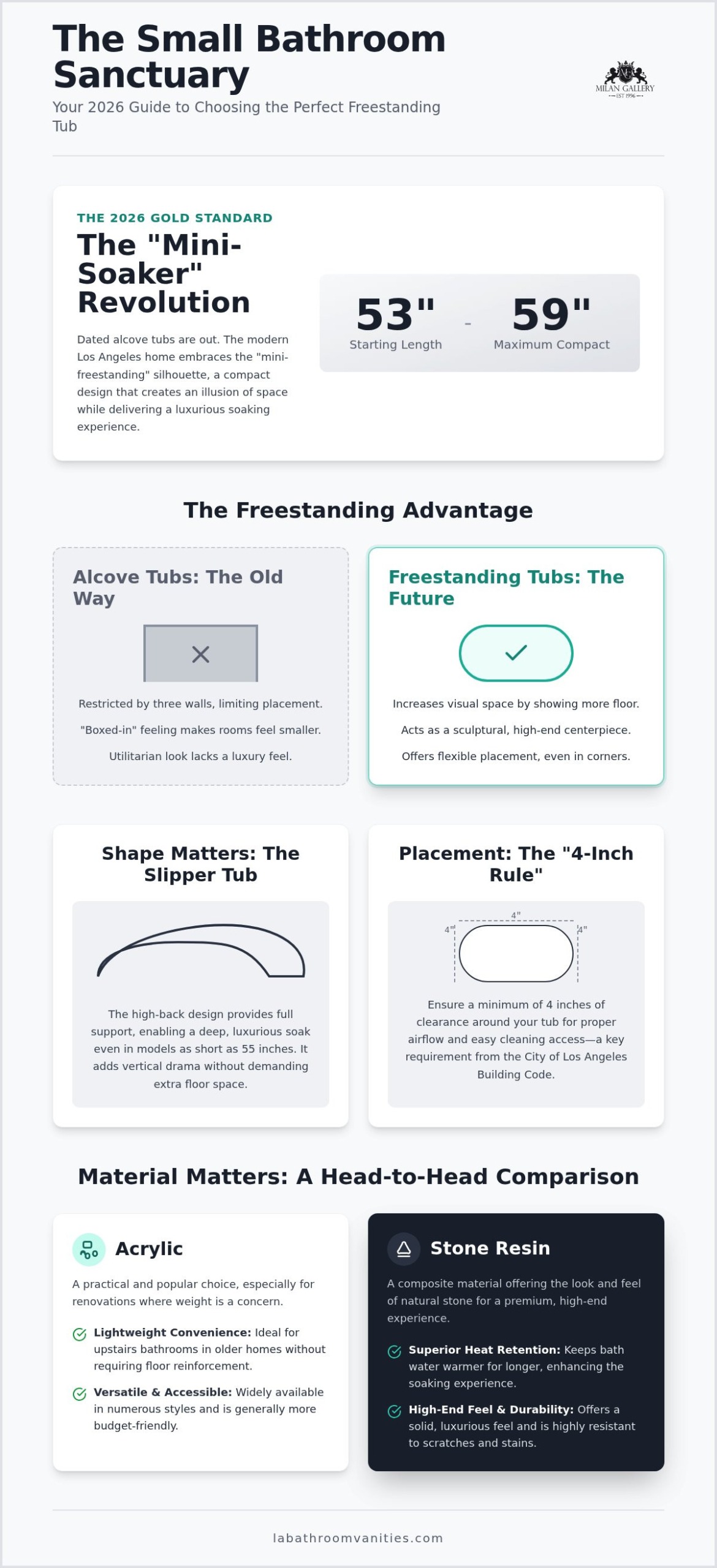
- Learn why the “mini-freestanding” silhouette is the 2026 gold standard for Los Angeles homes, replacing dated alcove tubs with compact designs between 53 and 59 inches.
- Discover how choosing a slipper tub’s high-back design can provide a deeper, more luxurious soak even in models as short as 55 inches.
- Master the “4-inch rule” for clearance to ensure your best freestanding tub for small bathroom layouts has proper airflow and easy cleaning access.
- Compare the lightweight convenience of acrylic for upstairs LA renovations against the superior heat retention and high-end feel of premium stone resin.
- Understand why an in-person “sit-test” at our Sun Valley showroom is the only way to guarantee your new tub fits your body as perfectly as it fits your floor plan.
Why Small Freestanding Tubs are the Ultimate 2026 Luxury Trend
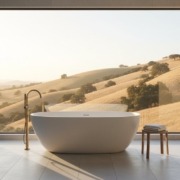
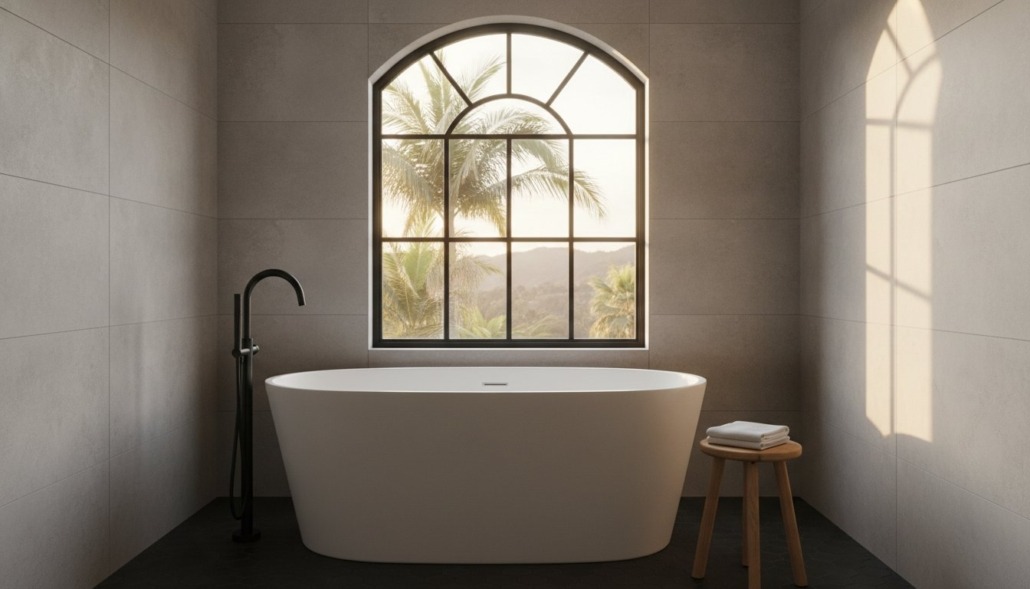
Have you ever walked into a boutique hotel in West Hollywood and wondered how they managed to make a tiny bathroom feel like a high-end spa? In the past, homeowners in Los Angeles often assumed that a luxury soak required a massive master suite, but the 2026 design landscape has completely shifted toward the “mini-soaker.” A compact freestanding tub, which typically measures between 53 and 59 inches in length, is no longer a compromise; it’s a deliberate style choice for the discerning urban dweller. By opting for the best freestanding tub for small bathroom layouts, you’re actually creating the illusion of more square footage because these silhouettes allow more of your beautiful floor tile to remain visible. This visual airiness removes the heavy, boxed-in feeling of traditional tubs, effectively opening up the room while providing a dedicated psychological sanctuary for relaxation. This shift is driven by several key factors we see every day in our Sun Valley showroom:
- Increased Floor Visibility: Showing more tile makes the floor plan feel expansive and intentional.
- Aesthetic Versatility: These tubs act as a sculptural centerpiece rather than a utilitarian fixture.
- Modern Efficiency: Newer models prioritize interior depth over exterior length for a superior soak.
Freestanding vs. Alcove: The Small Bathroom Debate
Why does a standalone fixture carry so much more weight in the LA real estate market? Beyond the immediate aesthetic validation, these pieces are often associated with a premium luxury label that can significantly boost your home’s appeal to future buyers who value modern, curated interiors. While traditional alcove tubs are restricted by three walls, a freestanding model offers incredible installation flexibility that allows you to rethink your entire layout. You can tuck a slipper tub into a corner or angle it to exploit an awkward layout that would otherwise be wasted space in an older home. When you explore different bathtub materials like lightweight acrylic or high-end stone resin, you’ll find that these units offer a level of sophisticated discernment that built-in options simply can’t match. This choice isn’t just about looks; it’s about the practical security of choosing a fixture that feels like a custom investment rather than a generic utility.
The Rise of the ADU and Guest Suite Soaker
With the recent surge in Accessory Dwelling Units (ADUs) and guest suites across neighborhoods like Silver Lake and Echo Park, the demand for high-impact, small-footprint fixtures has reached an all-time high. Designers are now prioritizing the “wow” factor in these secondary spaces, proving that you don’t need a massive footprint to enjoy a world-class experience. If you’re building a rental unit or a backyard retreat, finding the best freestanding tub for small bathroom projects is the key to setting your property apart from the standard competition. The mini-soaker is officially the 2026 standard for high-end compact design, offering a deep, immersive experience that fits perfectly into a 55-inch space. It’s the ultimate solution for homeowners who refuse to sacrifice their creative agency just because they’re working with a smaller footprint.
Choosing the Right Shape: Oval vs. Slipper Tubs for Tight Spaces
If you are staring at a floor plan that feels more like a puzzle than a master suite, have you considered how the shape of your fixture dictates the flow of the entire room? Selecting the best freestanding tub for small bathroom renovations requires a strategic look at how geometry impacts both your comfort and your ability to move around the space. While a standard 60-inch tub is the traditional benchmark, modern engineering has introduced shapes that maximize every square inch of your interior volume. It’s about finding that perfect balance where luxury meets logic.
The Slipper Tub Advantage for Deep Soaking
Slipper tubs are a true game-changer for those working with a footprint between 55 and 57 inches. Because one end is significantly elevated, you can lean back and enjoy a full soak even in a shorter model; the angled back supports your shoulders while your knees remain comfortably submerged. This vertical drama adds a sense of architectural flair without demanding extra floor space. If you pair these with floor-mounted faucets, you maintain a clean, minimal aesthetic that keeps the focus on the tub’s elegant silhouette and makes the entire room feel taller.
Oval Silhouettes and Traffic Flow
Oval tubs remain the gold standard for center-wall placement in narrow Los Angeles bathrooms. Their rounded edges are essential for preventing “hip-bumps” in tight quarters, allowing for smoother traffic flow between your shower and your vanity. These curves also provide a generous radius that makes cleaning behind the tub much simpler. When you’re planning these tight clearances, it’s helpful to reference the ADA guidelines for bathroom layouts to ensure your space remains functional and safe. Many of our clients find that pairing these softened oval silhouettes with modern bathroom vanities creates a balanced, contemporary look that feels intentionally designed rather than crowded.
For those who prefer a more geometric or ultra-modern aesthetic, rectangular freestanding tubs offer a crisp finish that fits perfectly into the corners of a new ADU. However, if your plumbing reach is limited, the “flat-back” freestanding hybrid is a secret weapon. It gives you the luxurious look of a standalone unit on three sides while sitting flush against the wall to simplify your drainage and supply lines. If you are designing a high-end guest suite, finding the best freestanding tub for small bathroom projects often comes down to this choice between curves and angles. You can always browse our current inventory to see how these different profiles compare in person before making your final decision.
The Perfect Fit: Measuring Dimensions for Small Bathroom Layouts
Are you worried that your dream tub will turn your morning routine into an obstacle course? When you are working with the limited square footage typical of a Santa Monica bungalow or a downtown loft, every fraction of an inch counts toward your daily comfort. Finding the best freestanding tub for small bathroom projects is a technical challenge that requires more than just a measuring tape; it requires a strategic understanding of spatial dynamics. While generic industry advice often suggests leaving a massive 12-inch gap on all sides, we know that is simply not realistic for most urban Los Angeles homes. Instead, we recommend following the 4-inch rule. This minimum clearance between the tub and your walls provides enough room for essential airflow and allows you to reach behind the fixture for easy cleaning without sacrificing precious floor space.
To achieve that perfect balance of luxury and utility, you should focus on standard compact lengths that have been engineered for high-density living. Most successful small-space renovations utilize tubs in the 55-inch, 59-inch, or 63-inch range. While length is the most discussed metric, the width is often where a layout succeeds or fails. A width of 28 to 30 inches is generally considered the “sweet spot” for narrow bathrooms, as it provides a comfortable soaking experience while keeping the center of the room open for movement. Before you fall in love with a specific model, always check your plumbing alignment. Ensuring your new drain location matches your existing footprint can save you from the expensive and invasive process of floor trenching, which is a common hurdle in older LA properties.
Critical Clearance and Access Points
Don’t forget to account for the “invisible” elements of your bathroom layout. You must measure for the full swing of your bathroom door and ensure that your vanity drawers can open completely without striking the side of the tub. It is also vital to consider vertical space; your tub filler needs enough height and reach to clear the rim comfortably. One helpful secret for tight layouts is that the footprint of the tub base is often significantly smaller than the rim. This allows you to tuck the base closer to other fixtures while maintaining an airy, open feel at eye level.
Pairing with the Right Vanity Size
Achieving spatial harmony means looking at your bathroom as a complete ecosystem. If you are installing a compact tub, pairing it with a 30 inch bathroom vanity often leaves just enough breathing room to prevent the room from feeling cluttered. You should generally avoid placing a massive 84-inch double vanity directly next to a small-footprint tub, as the scale discrepancy can make the tub look like an afterthought rather than a centerpiece. By consulting our guide to bathroom vanity sizes, you can ensure that every element of your renovation works together to create a cohesive, high-end aesthetic that will impress any visitor.
Material Matters: Acrylic vs. Stone Resin for Compact Bathrooms
Have you considered how much your bathtub actually weighs once it is full of water and a person is inside? While many design blogs might lead you to believe that stone resin is the only “true” luxury choice, the best freestanding tub for small bathroom projects in older Los Angeles homes is often a high-quality acrylic model. Why? Because a solid stone resin tub can weigh several hundred pounds before you even turn on the tap. In a 1920s bungalow or a mid-century apartment with original wood-joist floors, that weight—combined with nearly 50 gallons of water—can exceed safe structural limits without expensive floor reinforcement. Acrylic offers a lightweight, resilient alternative that is much easier to navigate through a tight hallway or up a narrow staircase while still providing that high-end sculptural look you desire.
When it comes to durability, both materials have unique strengths in our local climate. Los Angeles is known for its hard water, which can leave mineral deposits on porous surfaces over time. High-gloss acrylic is non-porous and incredibly easy to wipe down, making it a practical choice for busy households that want to maintain a pristine shine with minimal effort. On the other hand, stone resin is prized for its material resilience; it is a solid, homogeneous material that can be buffed or sanded if it ever sustains a minor scratch. If you’re unsure which material is right for your subfloor, visit our showroom to feel the weight and texture difference for yourself.
Heat Retention and the Soaking Experience
If you are someone who enjoys an hour-long spa session, stone resin is a fantastic thermal battery that keeps bathwater warm significantly longer than single-walled alternatives. However, modern double-walled acrylic has become the budget-friendly “thermos” equivalent for 2026, using an air gap between layers to provide impressive insulation. For those chasing the latest aesthetic trends, matte finishes are dominating the luxury market this year. While glossy finishes remain a classic choice for smaller rooms because they reflect light, a matte stone resin tub provides a tactile, organic feel that grounds a contemporary bathroom design.
Installation Logistics in Los Angeles
Before you commit to a purchase, you must pass the “staircase test.” Many apartment hallways in neighborhoods like Koreatown or Westlake are too narrow to accommodate a heavy, rigid stone tub. Acrylic is the champion of these difficult installations because it is easier for two people to maneuver around tight corners. If you are renovating a hillside property in Eagle Rock or the Hollywood Hills with difficult access, consider the delivery path carefully. We often recommend that our clients have a contractor verify their subfloor strength if they are leaning toward a stone model, as the practical security of a stable floor is just as important as the beauty of the fixture itself.
Find Your Perfect Soak at Our Los Angeles Showroom
Have you ever ordered something online only to realize it didn’t feel quite right once it arrived at your door? When you’re selecting the best freestanding tub for small bathroom renovations, that risk is simply too high to ignore. A spec sheet can tell you the exterior length and width, but it cannot describe the ergonomic curve of a slipper back or the tactile quality of a premium finish. We believe that finding the right fixture should be an inspiring creative journey rather than a stressful gamble. That’s why we encourage every local homeowner to perform a “sit-test” in our showroom. It’s the only way to guarantee that a compact model, perhaps a 55-inch or 59-inch unit, actually provides the deep, restorative soak you’re dreaming of before it is permanently installed in your home.
At our Sun Valley location, you can explore an extensive range of luxury freestanding bathtubs designed specifically for the unique architectural challenges of Los Angeles. Our expert consultants are here to help you measure your blueprints and visualize how different silhouettes will impact your traffic flow. You can also achieve total aesthetic harmony by pairing your selection with our wholesale bathroom vanities in a single trip. Seeing these elements together ensures that your vanity’s finish perfectly complements your tub’s profile, creating a cohesive look that provides both practical security and the high-end style your social circle will admire.
Why Milan Gallery Bathroom Vanities is the LA Renovator’s Partner
With over 15 years of experience in the local market, we’ve helped thousands of neighbors navigate everything from ADU builds to historic bungalow restorations. We pride ourselves on offering exclusive designs that you won’t find at generic big-box retailers, ensuring your home feels unique and curated. Perhaps most importantly, we maintain a massive local inventory right here in the valley. While other high-end stores might quote you a 12-week lead time, we’re often able to provide immediate availability so your renovation stays on schedule and your contractor isn’t left waiting.
Visit Our Sun Valley Showroom Today
Our showroom is conveniently located for residents across the city, from the hills of Burbank to the coast of Santa Monica. We invite you to see our 2026 collections of tubs, toilets, and vanities in person to truly appreciate the material resilience and craftsmanship we provide. We treat every small bathroom project with the same level of dedication as a sprawling master suite because we understand the emotional rewards of a completed home project. Stop by today and let us help you find the best freestanding tub for small bathroom spaces that will transform your daily routine into a world-class spa experience.
Ready to Reclaim Your Bathroom Sanctuary?
Are you ready to stop settling for a cramped alcove and start enjoying the spa experience you deserve? Selecting the best freestanding tub for small bathroom projects is finally achievable when you balance sculptural beauty with the practical realities of urban Los Angeles living. We have explored how the right slipper shape can provide a deep soak in a 55-inch footprint, and why lightweight acrylic is often the safest, most durable choice for our historic local bungalows. By following the 4-inch clearance rule and prioritizing interior depth over exterior bulk, you can create a high-end retreat that adds genuine value to your home and your daily life.
With over 15 years of Los Angeles design expertise, our team understands the specific logistics of city renovations. We invite you to explore the largest bathroom fixture showroom in the San Fernando Valley, where you can browse a curated selection of 2026 modern and traditional styles in person. Visit our Sun Valley showroom to find the perfect small freestanding tub for your LA home! We’re excited to partner with you on this creative journey and help you build a space that provides aesthetic validation for years to come.
Frequently Asked Questions
What is the smallest size for a freestanding bathtub?
The smallest freestanding tubs available today typically measure between 44 and 48 inches in length, though these are often deep, “Japanese-style” soaking tubs. For a more traditional reclining experience, most designers consider 53 to 55 inches to be the standard minimum. These compact footprints are specifically engineered to provide a luxurious immersion without overwhelming the limited square footage of a modern urban bathroom.
Can a freestanding tub actually fit in a 5×7 bathroom?
Yes, a freestanding tub can fit into a 5×7 bathroom if you select a model in the 53 to 59-inch range. Since a standard alcove tub is 60 inches long, a compact standalone unit actually uses less linear space. This creates a more open, airy feeling that can make a small layout feel significantly more expansive and high-end than a traditional built-in setup.
Do I need a special drain for a freestanding tub in a small space?
You will typically need a specialized “island tub drain” or a drop-in rough-in kit to ensure a secure, leak-proof connection. Because the plumbing for these units must come directly through the floor rather than a wall, these kits are essential for a clean installation. Using the right hardware ensures your best freestanding tub for small bathroom projects meets all 2023 California Plumbing Code requirements.
Are freestanding tubs harder to clean in small bathrooms?
They aren’t harder to clean if you maintain at least 4 inches of clearance between the tub and the surrounding walls. This gap allows you to use a microfiber mop or long-reach duster to easily clear away dust and moisture. If you don’t have enough space for this clearance, a “flat-back” hybrid model that sits flush against the wall is a much better choice.
How much clearance do I need around a small freestanding tub?
You should aim for a minimum of 4 inches of clearance on all sides to ensure proper airflow and easy cleaning access. While some generic guides suggest 12 inches, that is often unrealistic for tight Los Angeles floor plans. This 4-inch rule provides enough breathing room to prevent a cramped aesthetic while still maximizing the functional space you have available for other fixtures.
Is acrylic or stone better for a second-story bathroom in an old LA home?
Acrylic is generally the better choice for second-story renovations in older LA homes because it is significantly lighter than stone resin. A stone tub can weigh several hundred pounds before it is even filled with water, which may exceed the weight limits of original wood-joist floors. Acrylic offers the same luxury look without the need for expensive structural floor reinforcement or difficult installation logistics.
Can I use a wall-mounted faucet with a freestanding tub to save space?
Using a wall-mounted faucet is an excellent space-saving strategy because it removes the need for a floor-mounted filler. This allows you to position the tub closer to the wall, which is vital in narrow layouts. It creates a sleek, minimalist aesthetic that keeps your floor plan open while still providing the high-end functionality expected in a modern 2026 bathroom renovation.
Does a freestanding tub reduce the resale value of a small home?
Investing in the best freestanding tub for small bathroom layouts actually increases resale value by adding a premium, spa-like feel to the property. Modern buyers in Los Angeles prioritize aesthetic validation and luxury finishes, even in smaller homes or ADUs. A well-chosen freestanding tub acts as a major selling point that distinguishes your home from standard properties with basic, contractor-grade alcove fixtures.